

You’ve been swimming freestyle for years. Maybe you’re even pretty fast. But here’s something most swimmers don’t realize: you’re probably making at least 2-3 technique errors that are quietly stealing your speed and setting you up for injury.
I’ve coached swimmers at every level, from nervous beginners to competitive athletes, and I can spot these mistakes within the first few strokes. The frustrating part? Most of these errors feel normal because you’ve been doing them so long. Your body has adapted, compensated, and convinced you this is just “your stroke.”
But small technique problems create big consequences. A head position that’s off by just a few degrees can drop your hips and double your drag. A hand entry that crosses your centerline puts your shoulder through 13,000+ rotations per week in a mechanically compromised position. And research shows that 40-91% of competitive swimmers will experience shoulder pain at some point, often from technique errors they don’t even know they’re making.
The good news? Once you know what to look for, these mistakes are fixable. You don’t need perfect technique to swim well, but addressing even one or two of these issues will make you noticeably faster and help you swim pain-free for years to come.
Let’s break down the 7 most common freestyle mistakes and, more importantly, how to fix them.
Mistake #1: Looking Forward Instead of Down
This is the mistake I see most often, across all ages and abilities. It’s instinctive to want to see where you’re going, especially in open water or when you’re new to swimming. But looking forward is one of the most expensive errors you can make in terms of speed.
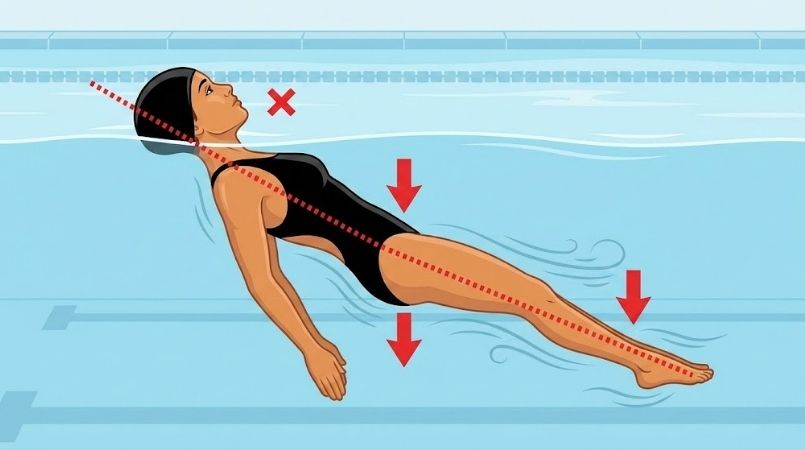
Here’s why it matters: when you lift your head to look forward, your hips and legs drop. It’s physics. Your body acts like a seesaw, and any weight shift forward sends the back end down. This creates a position where your lower body pushes through the water instead of cutting through it. Even a 5-7 degree change in body angle significantly increases drag.
The result? You’re working much harder to maintain the same speed. Your kick has to overcompensate just to keep your legs from sinking, which burns energy fast.
How to fix it: Look straight down at the black line on the pool bottom. The water should break at the crown of your head, not your forehead. Your head should feel like a natural extension of your spine, with your neck relaxed and neutral.
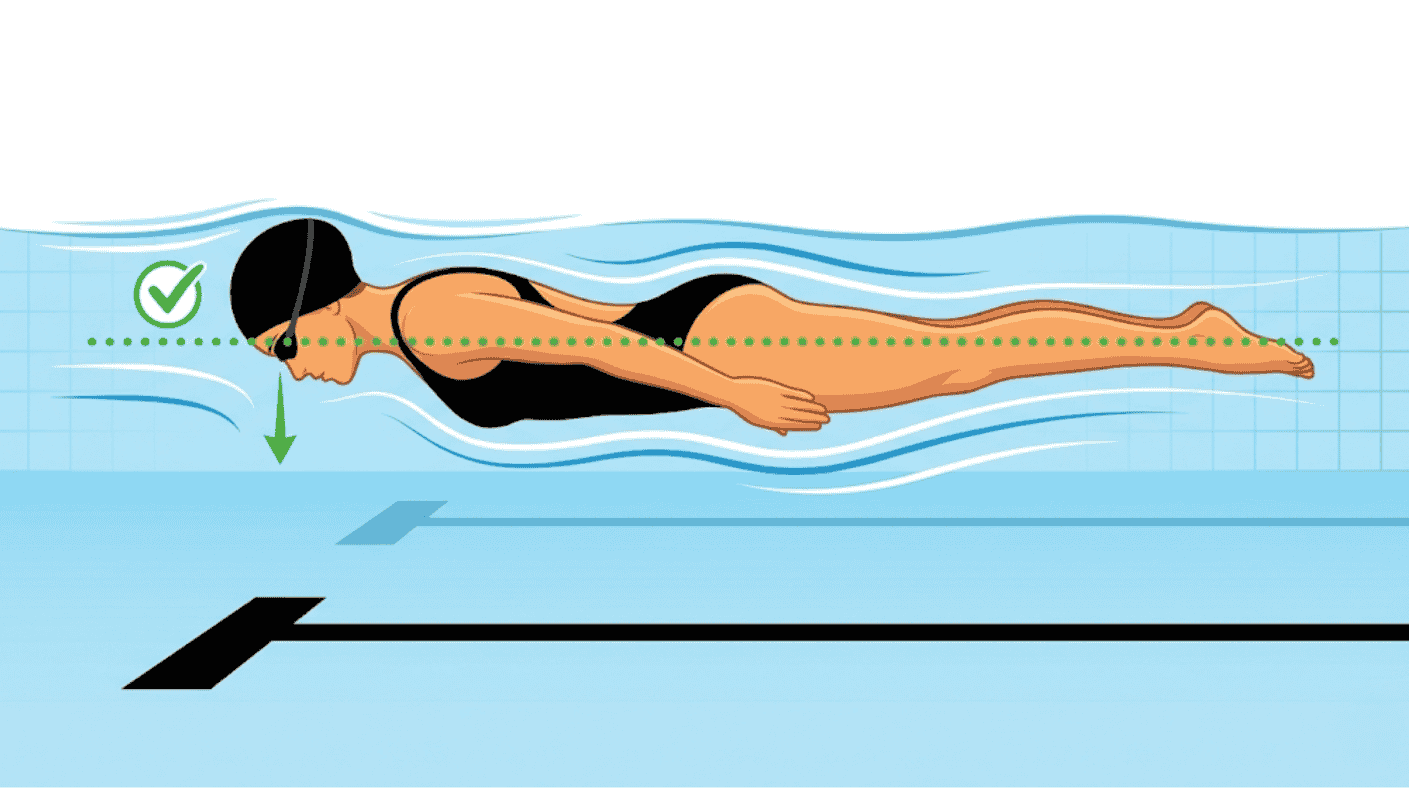
If you’re worried about running into the wall, use the backstroke flags (they’re typically 5 meters from each end) and the T-markers on the pool bottom to gauge distance. After a few laps, you’ll develop an internal sense of where you are without needing to look up.
Try this drill: Swim with a tennis ball tucked under your chin. It forces you to maintain a neutral spine position and gives you immediate feedback if your head position drifts upward.
Mistake #2: Breathing by Lifting Your Head
This mistake often goes hand-in-hand with looking forward, but it deserves its own attention because the breathing mechanics are different from general head position.
When you lift your head to breathe (instead of rotating to the side), you create the same seesaw problem: hips drop, legs sink, drag increases. But there’s an additional issue: lifting disrupts your stroke rhythm and creates a stop-and-go swimming pattern that kills momentum.
The correct way to breathe: Your head should turn with your body rotation, not separately. Think of your head and torso as one connected unit rotating together. As your body rolls to the side, your head turns just enough to get one goggle out of the water and one goggle in. You’re breathing into the pocket created by your head moving through the water.
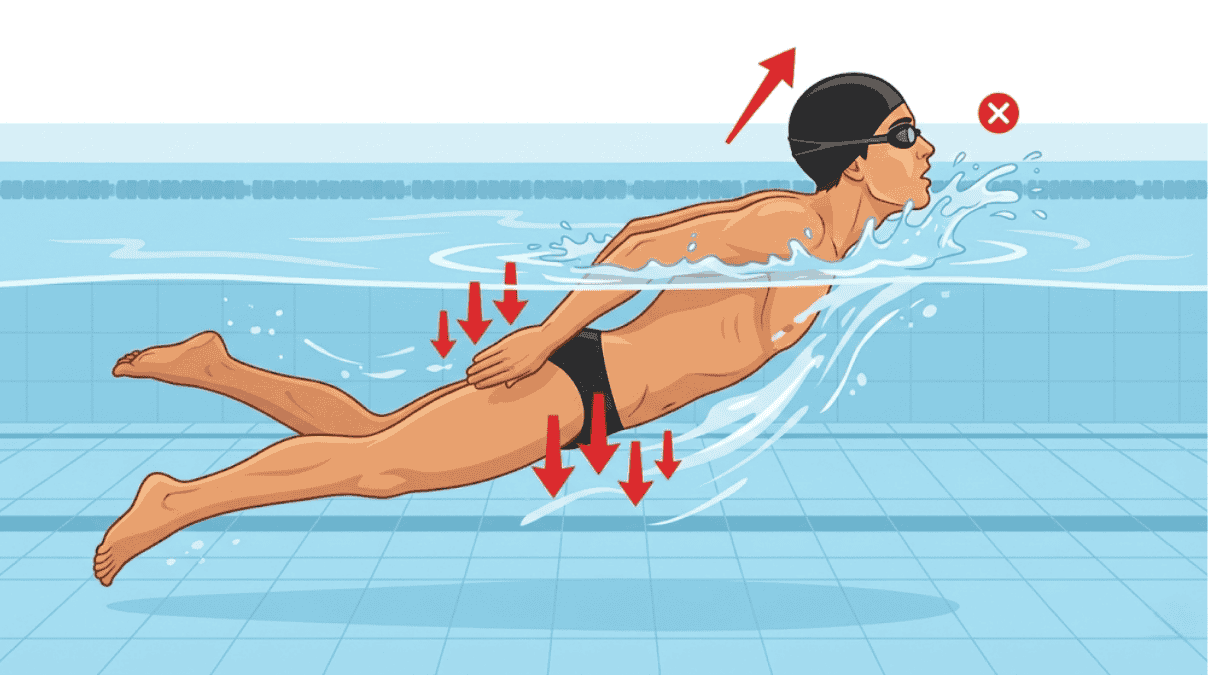
Exhale continuously underwater through your nose. This is critical. If you hold your breath underwater, you’ll need more time at the surface to both exhale and inhale, which extends the time your stroke is disrupted.
Bilateral breathing (breathing on both sides, typically every 3 strokes) is worth developing. It balances your stroke, reduces the risk of overuse injuries on one side, and helps you swim straighter. Start with whatever pattern feels comfortable, but gradually work toward bilateral breathing as your fitness improves.
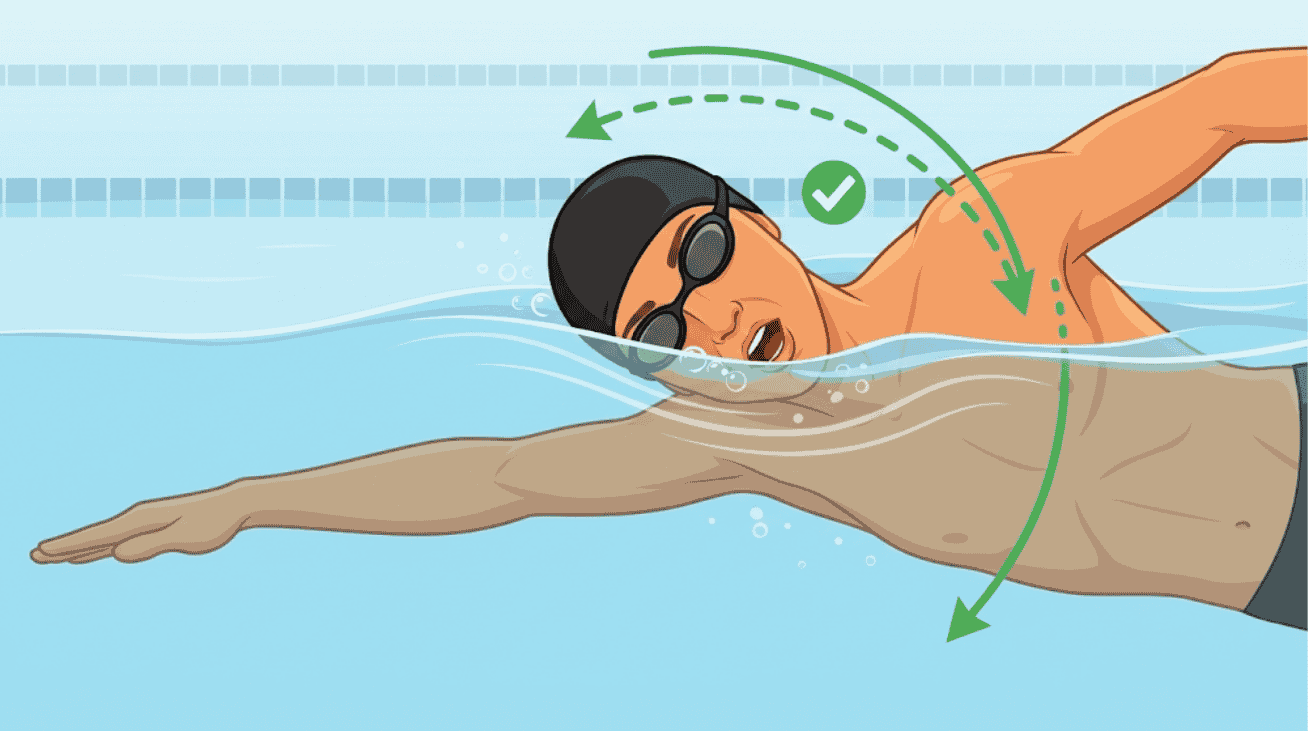
Try this drill: The 6-3-6 drill. Kick 6 times on your side with the bottom arm extended, take 3 full strokes, then kick 6 times on your other side. This helps you feel the proper body rotation and head position for breathing.
Mistake #3: Crossing Over at Hand Entry
Watch swimmers from the front, and you’ll often see their hands entering the water past their body’s centerline, sometimes even crossing over their nose. This “crossover” is more than just a stroke inefficiency problem. It’s a direct pathway to shoulder injury.
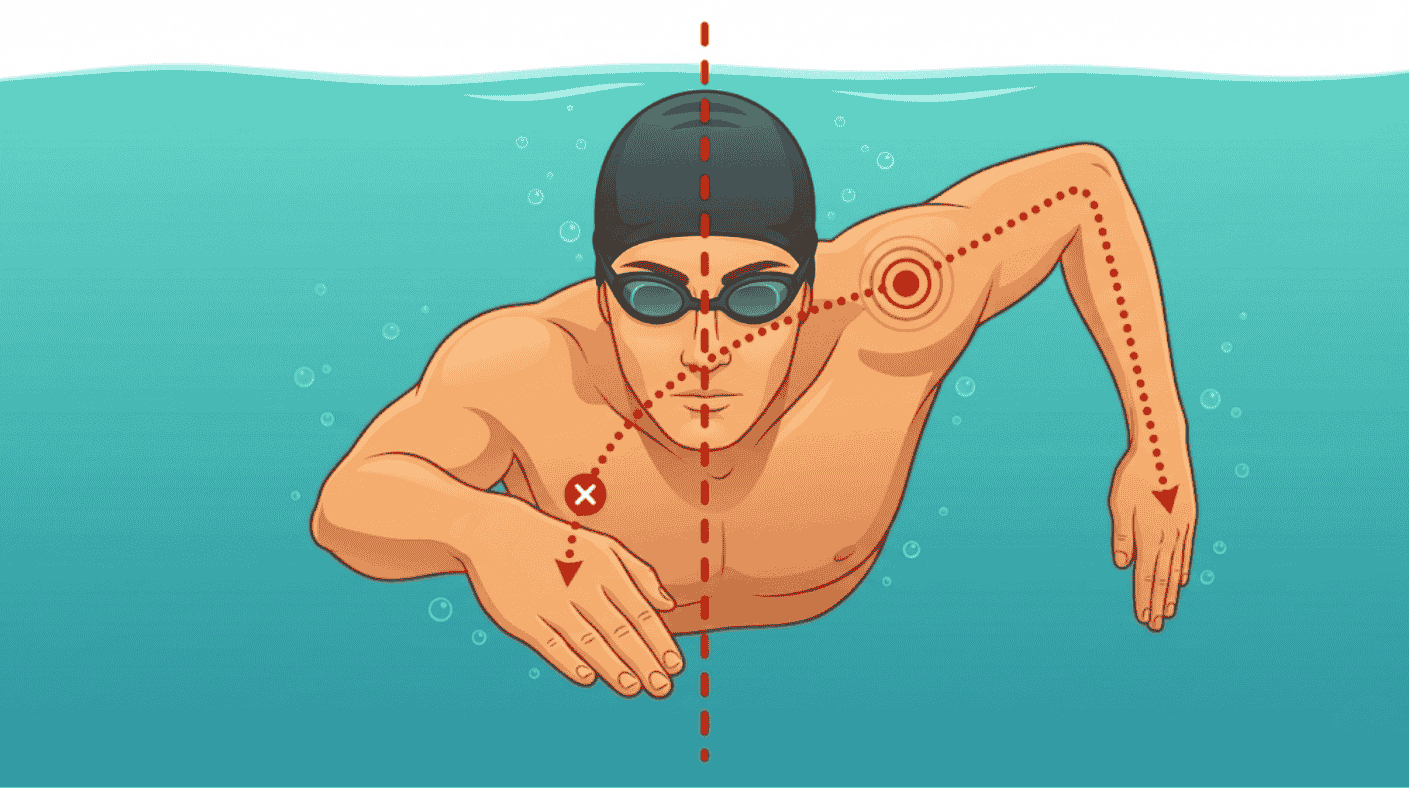
When your hand crosses the centerline, your shoulder joint moves into an impinged position. Your rotator cuff has to work at a mechanical disadvantage. This might not hurt today or tomorrow, but swimmers perform roughly 13,000 shoulder rotations per week in training. Small mechanical errors compound quickly.
Research shows that 40-91% of competitive swimmers report shoulder pain at some point in their careers. Crossover at entry is one of the primary culprits for what’s commonly called “swimmer’s shoulder.”
The fix: 11 and 1 o’clock entry. Imagine a clock face in front of you. Your left hand should enter at 11 o’clock, your right hand at 1 o’clock. Your hands should be roughly shoulder-width apart, creating two parallel “railroad tracks” through the water, not a single tightrope line.

Your middle finger should enter first at about a 45-degree angle, with your palm facing slightly outward. The entry should be in front of your shoulder, not in front of your face.
Here’s the tricky part: the correct entry will initially feel too wide. You’ve been crossing over for so long that the proper width feels awkward. Trust the process. Exaggerate the width when you first start correcting this, and eventually it will feel natural.
Video yourself: Even a basic smartphone in a waterproof case can give you valuable feedback. Shoot from directly in front (underwater if possible) and watch where your hands enter relative to your head and shoulders.
Mistake #4: Thumb-First Hand Entry
This one’s subtle but important. Many swimmers rotate their hand during recovery so their thumb enters the water first instead of their fingertips. It seems like a minor detail, but it sets up problems for everything that follows.
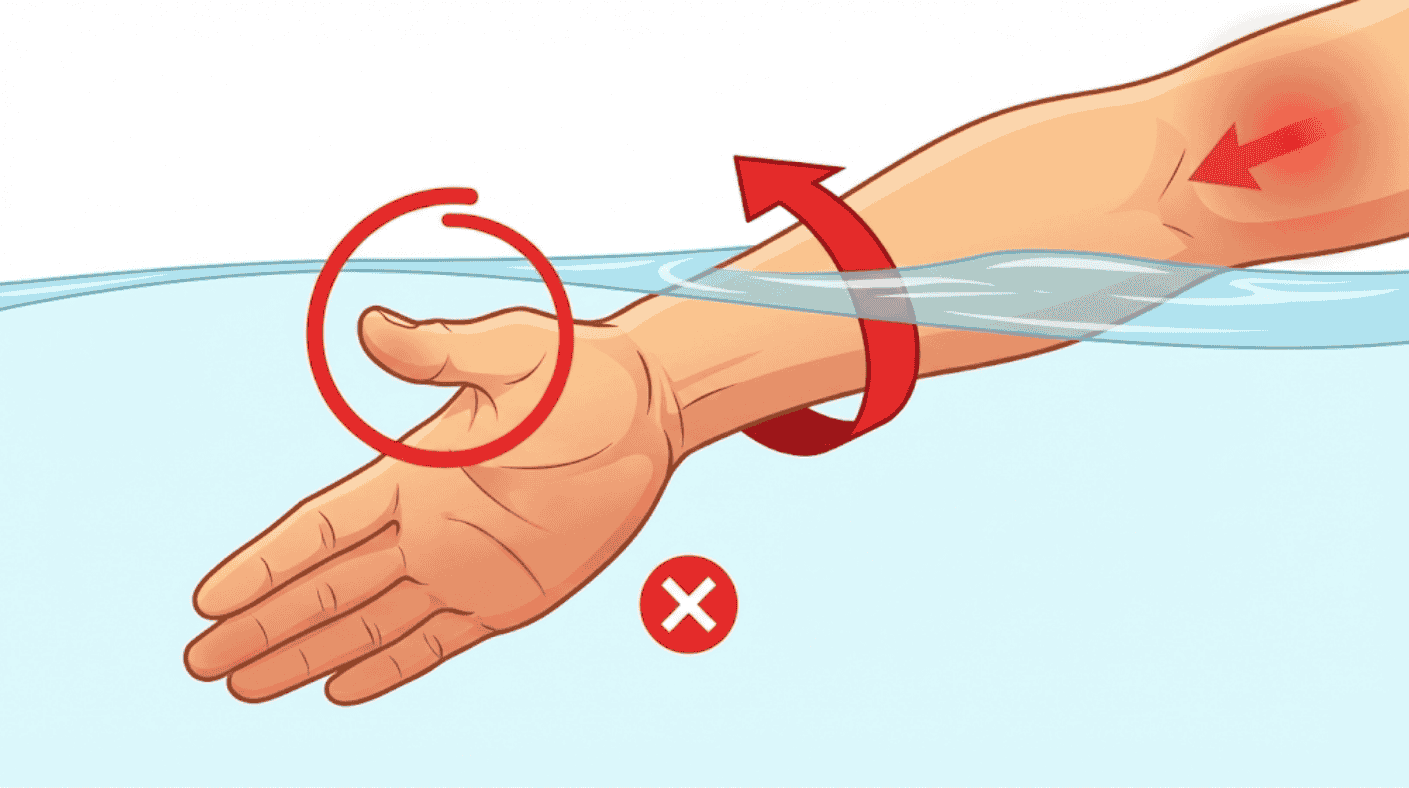
Thumb-first entry forces your shoulder into internal rotation, which closes off space in the shoulder joint and compresses soft tissues. It also limits your reach and makes it harder to set up an effective catch (the next phase of your stroke).
The correct entry: Your fingertips should lead, specifically your middle finger. Your palm faces down and slightly outward as your hand enters. Think of your hand entering the water like you’re reaching over a barrel, not slapping the surface flat.

Try this drill: Fingertip drag drill. During the recovery phase, drag your fingertips along the surface of the water. This naturally orients your hand into the correct position for entry and gives you tactile feedback on your hand position throughout the recovery.
Mistake #5: Dropping the Elbow During Pull
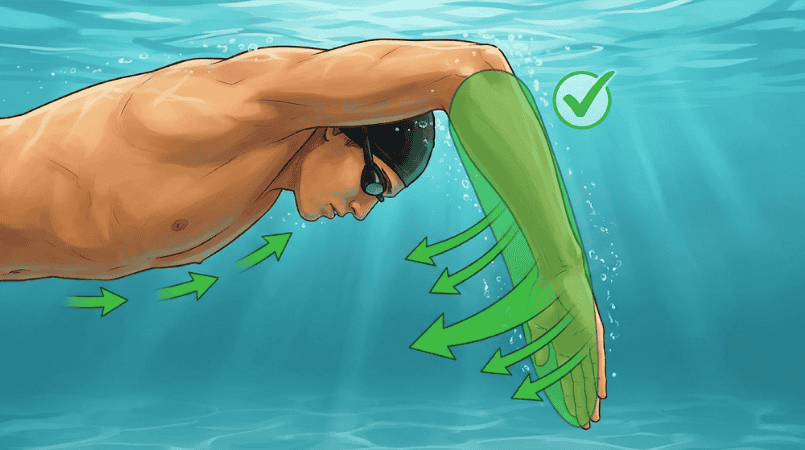
This is where a lot of swimmers lose power. After your hand enters and extends forward, you need to “catch” the water by dropping your hand down while keeping your elbow high. This creates what’s called Early Vertical Forearm (EVF), where your forearm becomes vertical and pointing toward the pool bottom.
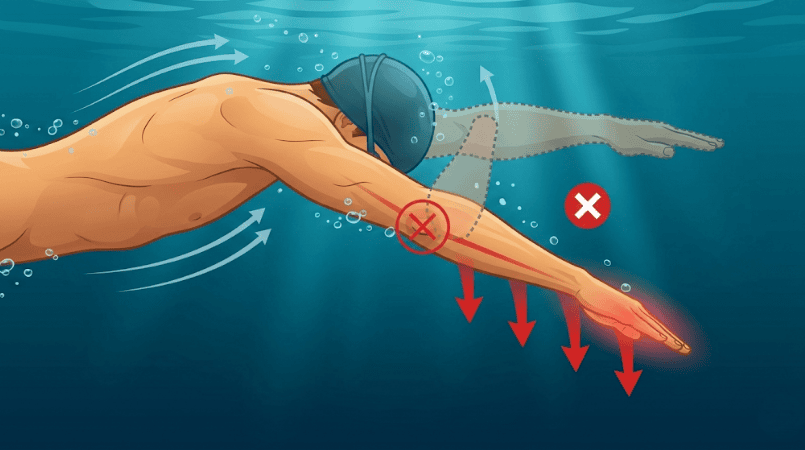
When you have good EVF, your entire forearm plus your hand becomes a large paddle surface pushing water back. When you drop your elbow, you’re only pushing with your hand, and much of that effort pushes water down instead of back.
The result: your body bobs up and down rather than driving forward. You lose up to 50% of your potential propulsion, and your shoulder takes more stress because it’s working at a mechanically weaker angle.
Key drills:
- Fist drill:Swim freestyle with your hands in tight fists. This forces your forearms to do the work and helps you feel the proper catch position.
- Catch-up drill:One hand stays extended in front while the other completes a full stroke. Focus intensely on the catch and high elbow position.
Mistake #6: Kicking From the Knees
Many swimmers, especially beginners, kick with excessive knee bend, creating a “bicycle kick” or pedaling motion. This breaks your body’s streamline and creates drag while burning energy without generating much forward thrust.
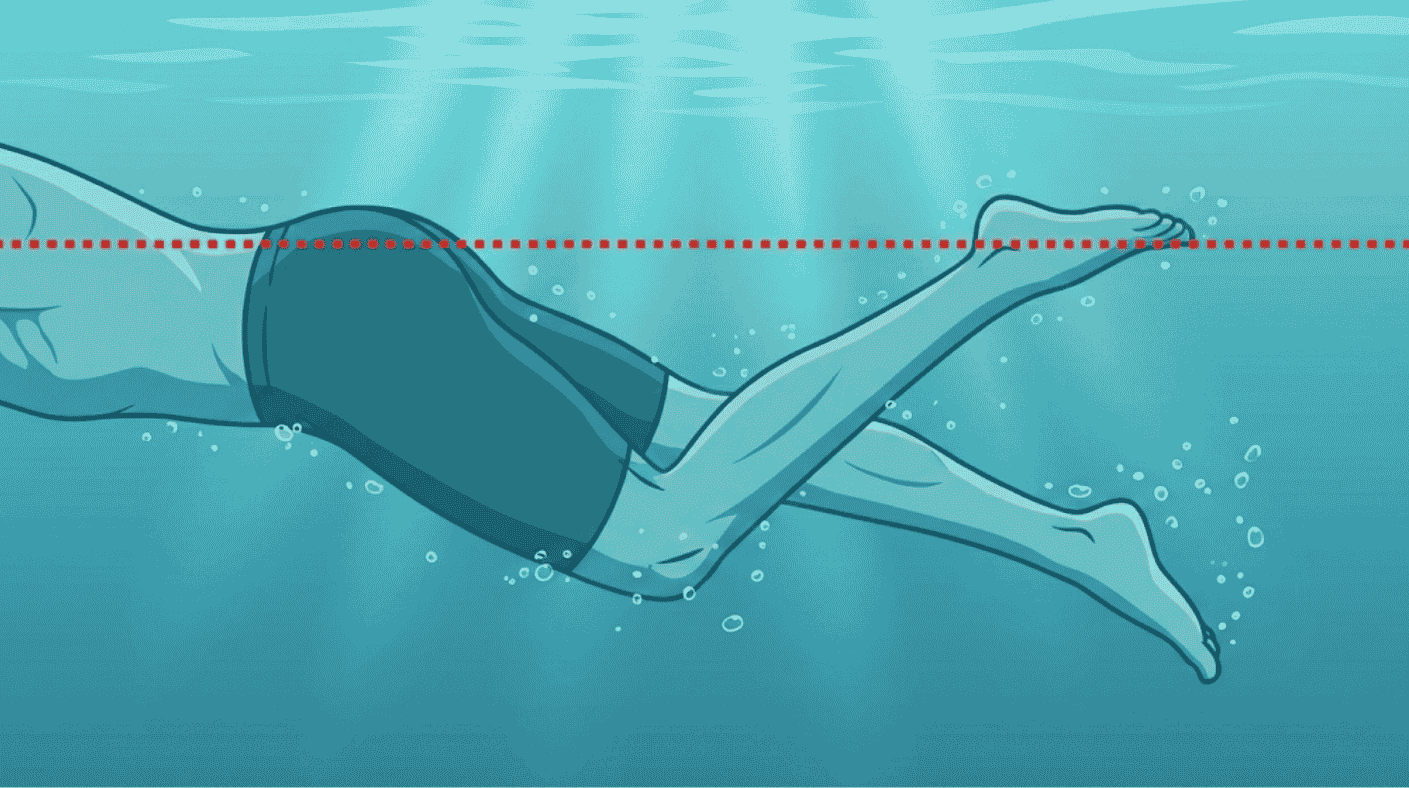
Correct kick mechanics: Your kick should initiate from your hips and glutes, not your knees. Think of your legs as a whip, with power coming from the hip and the motion flowing down through the leg to your feet.
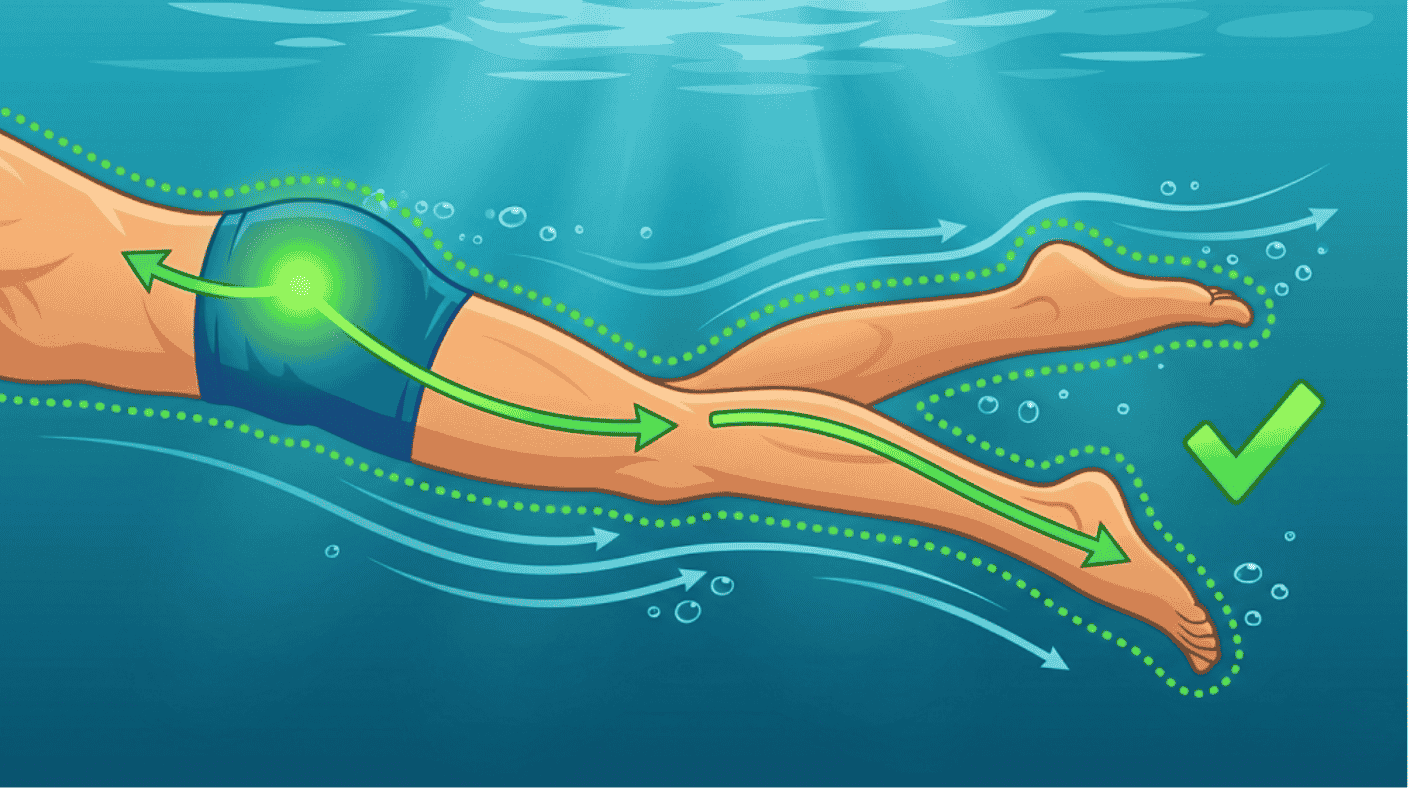
Keep your kick small and fast. The amplitude (how much your legs move up and down) should stay within your body’s “shadow.” Your legs shouldn’t entirely break the surface (causing splash) or drive too deep (creating drag).
Your ankles should be relaxed with toes pointed. Stiff ankles prevent effective propulsion.
Try this drill: Vertical kicking in the deep end. Tread water using only your kick, keeping your hands above water. This forces you to engage your hips and core rather than just bending your knees. If you can maintain position for 30 seconds with good technique, your kick is likely initiating from the right place.
Mistake #7: Poor Body Rotation / Swimming Flat
Swimming flat is exhausting. When you don’t rotate your body, you’re forced to power your entire stroke with your shoulders and arms. That’s a recipe for both slower swimming and eventual shoulder problems.
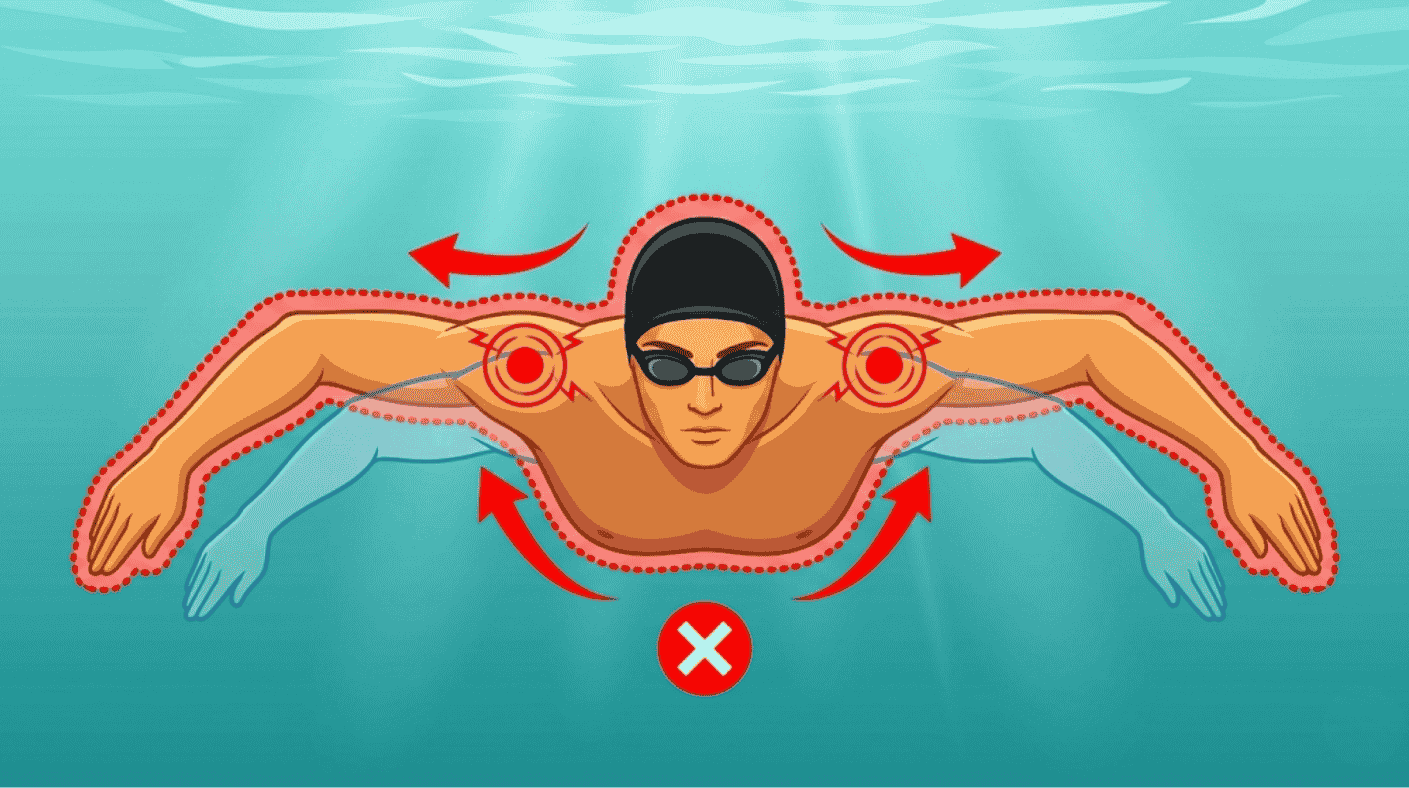
Why rotation matters: Proper body rotation engages your larger lat and core muscles, not just your shoulders. It reduces frontal drag by presenting a narrower profile to the water. It makes breathing natural instead of forced. And it allows for a longer, more powerful stroke.
Optimal rotation range: You should rotate 40-65 degrees to each side. Your hips and shoulders should rotate together as a connected unit. Your head stays relatively stable, only turning when you breathe.
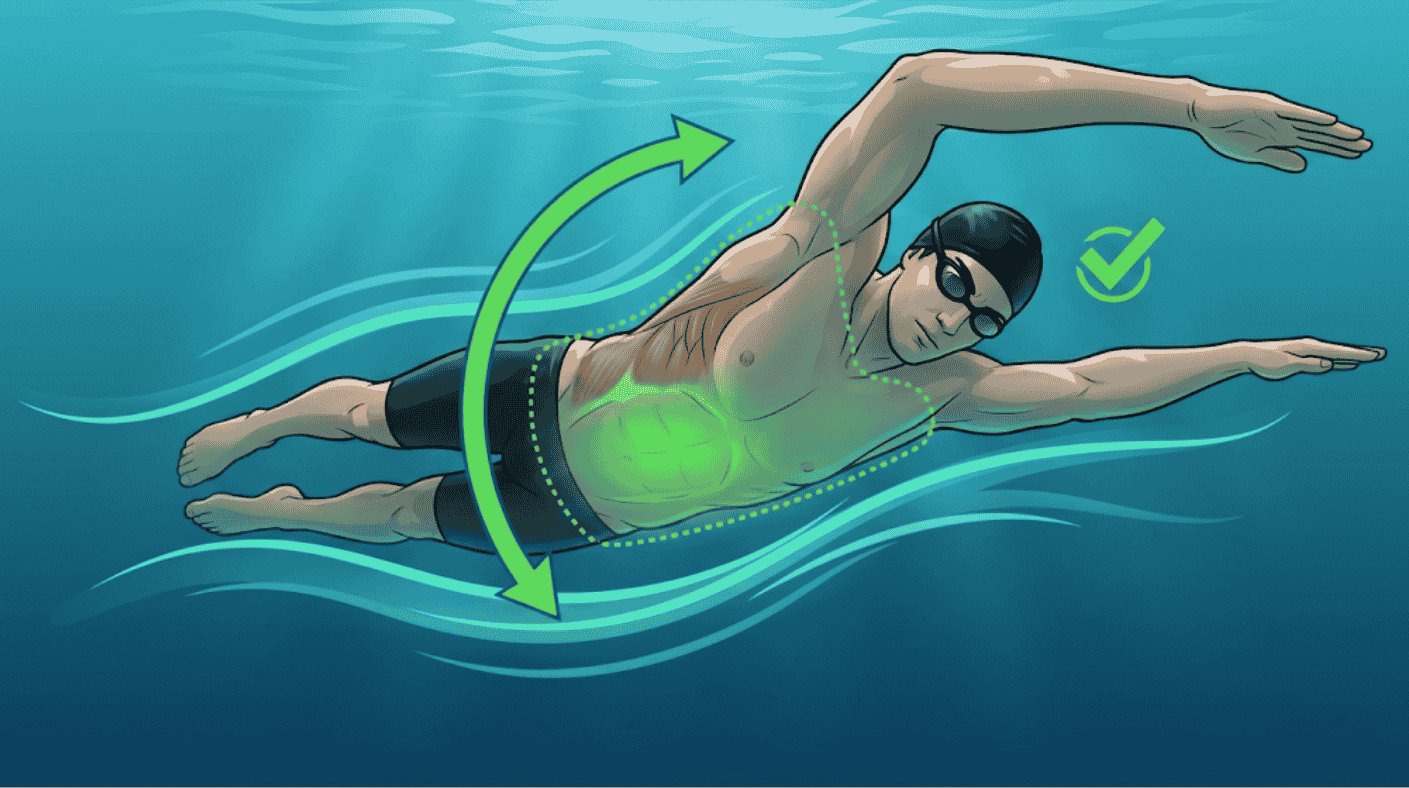
Think of swimming on your side, rolling from one side to the other, rather than swimming flat on your stomach. Each stroke should feel like you’re reaching over a barrel.
Signs of over-rotation: If your entire face comes out of the water when breathing, or if your opposite shoulder dips so deep it crosses the centerline, you’re rotating too much. If you’re snaking through the water rather than tracking straight, that’s also over-rotation.
Try this drill: Side kick drill. Kick on your side with your bottom arm extended in front and your top arm at your side. Count 6 kicks, then take 3 strokes and switch to your other side. This helps you feel the proper rotation angle and builds comfort holding that position.
Quick Self-Assessment: How’s Your Freestyle?
You don’t always need a coach or video analysis to identify problems. Here are some questions to ask yourself during your next swim:
Head position: Can you see the black line directly below you without lifting your chin?
Breathing: When you turn to breathe, can you keep one goggle in the water?
Hand entry: Do your hands feel like they’re entering at shoulder width, or are they closer to your centerline?
Pull finish: Do your thumbs brush your thighs at the end of each stroke?
Kick origin: Does your kick feel like it’s coming from your hips or your knees?
Body rotation: Can you feel your hips and shoulders rolling together, or are you swimming relatively flat?
If you answered “no” or “I’m not sure” to any of these, that’s your starting point. Pick one thing to focus on, not all seven at once.
Final Thoughts
Here’s what I want you to remember: perfect swimming technique doesn’t exist. Even Olympic swimmers have quirks and individual variations in their strokes. The goal isn’t perfection. The goal is swimming faster with less effort while staying healthy.
These seven mistakes are common because they’re either instinctive (looking forward) or they develop slowly over time as your body compensates for other issues. The good news is that once you identify them, most are surprisingly fixable with focused practice.
Work on one mistake at a time. Trying to fix everything at once is overwhelming and usually ineffective. Pick the issue that resonates most with you, spend a few weeks drilling it, and then move to the next one.
If possible, get video feedback or work with a coach who can spot these errors. Sometimes you can’t feel what your body is actually doing in the water, and external feedback is invaluable.
Swimming is one of the few sports where small technique improvements can immediately make you faster. A few degrees of better head position, a slightly higher elbow, proper body rotation – these changes don’t require you to get stronger or fitter. They just require awareness and practice.
Your fastest swimming is still ahead of you. Now you know what’s been holding you back.
Want to learn new swimming techniques or fix your existing one with the help from an experienced coach? Rocket swim is here in Toronto for you. Over the years Rocket swim has been successfully help the swimmers to reach their swimming goal and become one of the leading swimming club in Toronto