
Most people assume breaststroke is the easier stroke.
Well, they’re half right—and that half-truth leads a lot of beginners down the wrong path.
Both strokes have real advantages. Breaststroke lets you breathe whenever you want and see where you’re going. Freestyle covers more distance with less effort once you get the hang of it. The right pick depends on your comfort level in the water, what you’re training for, and whether you’re five years old or fifty.
This guide breaks down the actual differences—speed, difficulty, calorie burn, injury risk, and which stroke suits which age group—based on what we see every day coaching swimmers at Rocket Swim Club, from nervous first-timers to international competitors. Just the stuff that helps you make a good decision.
Quick Answer (For People in a Hurry)
If you’re reasonably comfortable in the water and can put your face in without panicking, start with freestyle. It’s more efficient, more versatile, and the foundation for everything else in swimming. You’ll struggle with breathing for the first few weeks, but that passes.
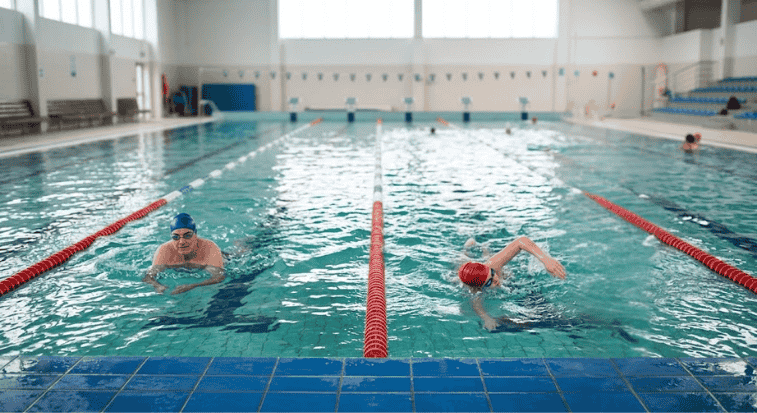
If water makes you anxious, start with breaststroke. It keeps your head up, gives you a clear view of your surroundings, and builds the water confidence you need before tackling freestyle. There’s no shame in that starting point—plenty of strong swimmers began there.
The short version: breaststroke is easier in week one. Freestyle is better by month two.
Breaststroke vs Freestyle Speed Comparison – How Fast Can You Actually Go?
Freestyle is faster. That’s not opinion—it’s physics. At the Olympic level, the difference is roughly 20%: the 200m freestyle world record sits around 1:42, while 200m breaststroke is closer to 2:05. But Olympic splits don’t mean much if you’re swimming your first laps at the local pool.
Here’s what recreational swimmers can actually expect:
| Level | Freestyle (per 25m) | Breaststroke (per 25m) |
| Beginner | 30–45 seconds | 35–55 seconds |
| Intermediate | 20–30 seconds | 25–40 seconds |
| Experienced | 10–20 seconds | 14–28 seconds |
The reason freestyle pulls ahead is drag. In breaststroke, both your arms and legs recover underwater—you’re pushing water forward with every stroke cycle, which acts like a brake. Freestyle keeps the arms above water during recovery, so you maintain momentum instead of fighting it. The continuous kick also generates steady propulsion, compared to breaststroke’s stop-start pattern.
Breaststroke vs Freestyle Learning Curve – Which One Is Actually Easier?
Why Breaststroke Feels Easier at First
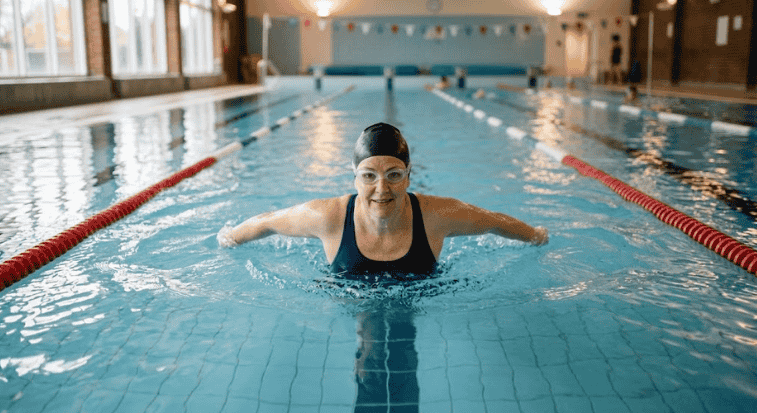
Your head comes above water. You can breathe more often. You can see the wall, the lane rope, the other swimmers—everything that makes a nervous beginner feel safer. The symmetrical arm-and-leg pattern also feels more intuitive than freestyle’s alternating motion. Most people can do a rough version of breaststroke within one or two sessions.
Why Freestyle Feels Hard for Beginners Initially
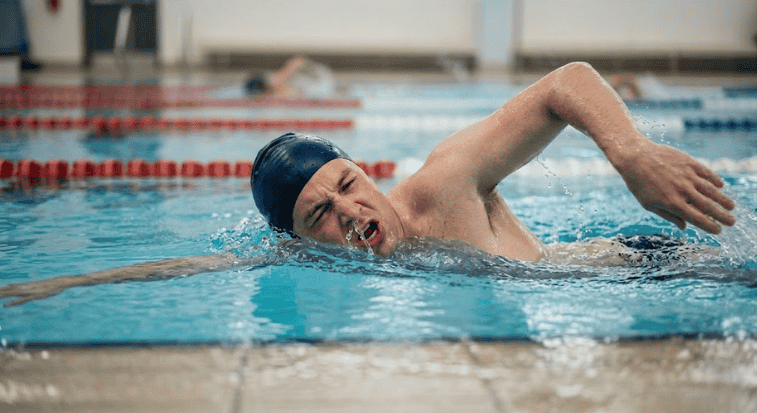
Face in the water is the biggest barrier. Your brain doesn’t like it, and the instinct to lift your head is strong. Coordinating side-breathing with arm strokes is the single hardest skill for new swimmers—it takes most adults 4–6 weeks of regular practice to get comfortable. Body rotation feels unnatural at first, and the timing between breathing, pulling, and kicking can feel like patting your head while rubbing your stomach.
The Catch – Why Competitive Breaststroke Is Technically Harder
Here’s something most beginners don’t realize: the casual breaststroke you see people doing at the beach is not the same stroke competitive swimmers perform. Proper breaststroke requires precise kick timing, a narrow whip kick (not a wide frog kick), a tight streamline between strokes, and exact coordination of the breathing window. At a high level, breaststroke is arguably the most technically demanding of all four competitive strokes. So while it’s easy to learn a rough version, mastering it is a different story.
Breaststroke vs Freestyle Calories Burned – Which Stroke Is the Better Workout?
Freestyle burns roughly 300 calories per 30 minutes of moderate swimming. Breaststroke burns around 200 calories in the same time frame. That’s a meaningful gap—about 50%—and it adds up over weeks of training.
The difference comes down to sustained effort. Freestyle’s continuous motion keeps your heart rate elevated throughout the swim. Breaststroke’s glide phase creates small recovery windows in every stroke cycle, which lowers your average heart rate. That said, intensity matters more than stroke choice. A hard breaststroke set will burn more calories than lazy freestyle laps. Your body weight also shifts these numbers—a 200-pound swimmer burns significantly more than a 130-pound swimmer doing the same workout.
Breaststroke vs Freestyle Muscles Worked – Different Strokes Hit Different Areas
What Breaststroke Works
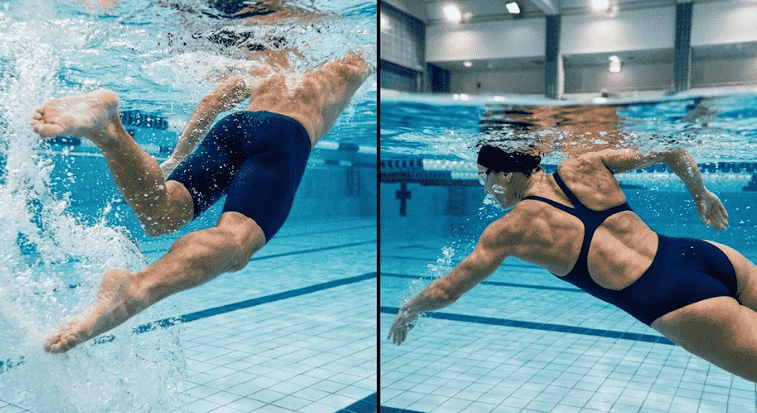
Breaststroke is leg-dominant. The kick generates roughly 70% of your propulsion, so your inner thighs, quads, hamstrings, and hip flexors do most of the work. Your chest and triceps engage during the pull phase, but the legs carry the load. This makes breaststroke a solid option if you’re rehabbing an upper body injury or want to emphasize lower body strength.
What Freestyle Works
Freestyle is more upper-body focused. Your lats, shoulders, and core do the heavy lifting during the pull, while the rotating motion builds shoulder mobility and stability. Your hip flexors, glutes, and calves contribute through the kick, but the arms and back drive the stroke. If you want a workout that targets your shoulders and back, freestyle delivers.
| Muscle Group | Breaststroke | Freestyle |
| Quads / Hamstrings | High | Moderate |
| Inner Thighs / Hip Flexors | High | Low |
| Chest / Triceps | Moderate | Moderate |
| Shoulders / Lats | Low–Moderate | High |
| Core | Moderate | High |
| Glutes / Calves | Low | Moderate |
Breaststroke vs Freestyle Injury Risk – Which Stroke Got Higher Risk
Every stroke has a weak spot, and this is something most swimming guides skip over entirely.
Breaststroke puts stress on the knees—specifically the medial collateral ligament on the inner side of the knee. The repetitive whip kick motion can irritate this area over time, and “swimmer’s knee” is almost exclusively a breaststroke problem. If you have pre-existing knee issues or a history of knee injuries, breaststroke may not be your best entry point.
Freestyle is harder on the shoulders. The repetitive overhead arm motion can aggravate the rotator cuff, particularly if you swim with poor technique or ramp up your distance too quickly. Shoulder impingement is the most common overuse injury in freestyle swimmers.
The honest answer: neither stroke is risk-free, and a good coach should screen for pre-existing joint issues before recommending a training plan. At Rocket Swim Club, our coaches assess each swimmer’s movement patterns before prescribing stroke-specific work. That kind of individualized attention matters, especially for adults returning to the pool after years away. Learn more about our adult and masters programs.
Does Age Matter in Breaststroke or Freestyle – Which Stroke Is Best for What Age
Kids (5–12)
Most structured swim programs—including those aligned with Swimming Canada’s learn-to-swim progression—start children on freestyle or backstroke, not breaststroke. The reason is developmental: the kick requires hip coordination and joint flexibility that younger kids haven’t fully developed. Freestyle’s kick is a more natural motion for children, closer to walking or running. Breaststroke typically gets introduced once a child has solid water confidence and basic freestyle ability.
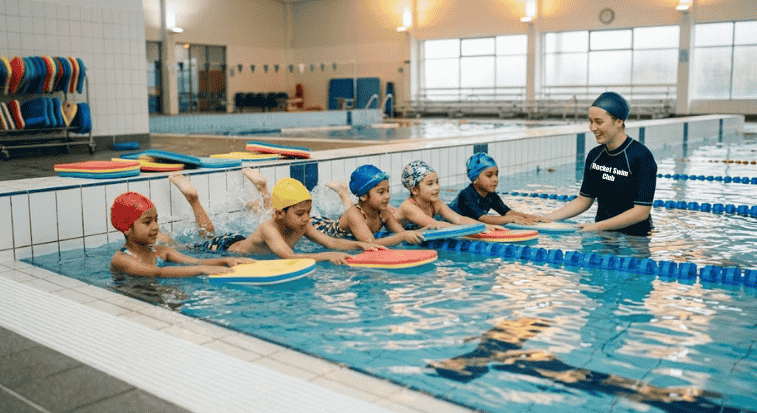
Rocket Swim Club’s Novice programs follow this same progression for kids across the Greater Toronto Area—building water confidence and stroke fundamentals before layering on more technical skills.
Teens and Adult Beginners
Adults often gravitate toward breaststroke because keeping their head above water feels safer. That’s a valid instinct, and there’s nothing wrong with starting there. But adult learners who push through the initial discomfort of freestyle tend to progress faster in the long run. Teens usually adapt quickly to either stroke and can handle both simultaneously.
Swimmers Over 50
Joint health starts to dictate stroke selection. Freestyle is generally gentler on the knees, while breaststroke is easier on the shoulders. Many masters swimmers alternate between the two to spread the load across different joints and muscle groups. If you’re over 50 and getting back into swimming, a mixed-stroke approach is the smartest path forward.
Breaststroke vs Freestyle Pool vs Open Water – Does the Setting Change Your Choice?
In a pool, the choice between strokes comes down to your goals and preferences. In open water, the setting itself starts to influence the decision.
Breaststroke gives you visibility. You can lift your head on every stroke to see where you’re going, spot obstacles, and navigate without stopping. For casual lake swimming, beach swimming, or any situation where you need awareness of your surroundings, breaststroke is practical and safe.
Freestyle wins for distance. If you’re swimming a triathlon, crossing a lake, or covering any significant stretch of open water, freestyle’s efficiency makes it the clear choice. You cover more ground with less energy. Most competitive open water swimmers use freestyle as their primary stroke and “sight” by lifting their head briefly every few strokes to check direction.
Waves and currents also play a role. Breaststroke’s forward-facing position handles chop better for beginners. But choppy water slows breaststroke down significantly because of the added drag from the stroke’s wider profile. Experienced open water swimmers stick with freestyle for this reason.
Breaststroke vs Freestyle: Starter Drills for Each Stroke
Knowing which stroke to learn is one thing. Knowing how to practice it is another. These are actual drills used in swim programs—including at Rocket Swim Club—to build technique from the ground up.
Two Breaststroke Drills for Beginners
- Wall Kicks. Hold the pool wall with both hands, extend your body behind you, and practice the frog kick in isolation. Focus on the whip motion—heels draw up toward your glutes, feet turn outward, then snap together. Repeat until the timing clicks. This isolates the kick without the distraction of arm coordination.
- Pull-Breathe-Kick-Glide. Slow the full stroke down to four distinct beats. Pull, breathe, kick, then hold the glide for a full two-count before starting the next cycle. Most beginners rush through the glide and lose all the efficiency breaststroke is supposed to give you. Forcing the pause fixes that.
Two Freestyle Drills for Beginners
- Side-Kick Breathing Drill. Lie on your side with one arm extended forward and the other resting along your body. Kick gently and practice turning your head to breathe without lifting it. This is a great drill for fixing the breathing problem that stops most beginners. Once you can breathe comfortably on your side, full freestyle gets dramatically easier.
- Catch-Up Drill. Swim freestyle, but keep one arm extended in front of you until the other arm completes its full stroke and “catches up.” This slows the stroke down, forces proper timing, and prevents the rushed, windmill-style arm cycle most beginners default to.
Breaststroke vs Freestyle: Side-by-Side Comparison Table
A quick reference covering the main differences between both strokes:
| Category | Breaststroke | Freestyle |
| Speed | Slowest competitive stroke | Fastest competitive stroke |
| Ease of Learning | Easier in the first few weeks | Harder initially, easier long-term |
| Calories (30 min) | ~200 calories | ~300 calories |
| Muscles Targeted | Legs, inner thighs, chest | Shoulders, lats, core |
| Joint Risk | Knees (swimmer’s knee) | Shoulders (rotator cuff) |
| Best Age Group | Teens and adults | All ages (kids start here) |
| Pool vs Open Water | Better visibility in open water | Better for distance and efficiency |
Why You Should Learn Both (And in What Order)
Competitive swimmers train all four strokes for a reason—each one reinforces the others and prevents overuse injuries from repetitive motion. You don’t need to be competitive to benefit from the same approach.
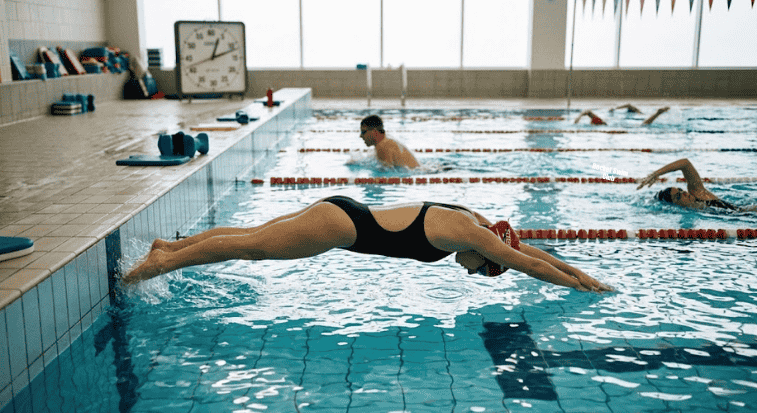
A solid learning order: freestyle first (or alongside backstroke for kids), then breaststroke once you have reliable water confidence and coordination. Mixing strokes in a single workout breaks up monotony and distributes the physical load across different muscle groups and joints. You’ll swim longer, recover better, and progress faster.
Breaststroke vs Freestyle: How to Find the Right Program
The stroke you start with matters less than the quality of instruction you receive. Look for a program with coaches who teach actual technique—not just survival swimming—and a progression pathway that eventually covers all strokes.
Rocket Swim Club offers structured programs from complete beginners through competitive swimmers across Toronto’s Bloor West area and the Greater Toronto Area. Our coaches, Alina and Ivan, bring national-level training methodology from their years on the Moldova National Swim Team, combined with performance tracking through our Sportecos technology partnership. Whether you’re enrolling a child in their first lessons or getting back in the pool at 55, there’s a clear pathway forward. Explore our programs and book a tryout.
Your Final Takeaway
Most swimmers will benefit from learning freestyle as their primary stroke, with breaststroke as a useful secondary skill. But there’s no wrong starting point if it gets you in the water and keeps you coming back. Swimming is a lifelong skill—not a one-time achievement—and the best stroke to start with is whichever one gets you moving.
If you’re in the Toronto or Greater Toronto Area and looking for a program that teaches proper technique from day one, check out Rocket Swim Club’s programs. From first-time swimmers to international competitors, there’s a lane for you.
Questions People Asked Related to Breaststroke vs Freestyle
Is breaststroke or freestyle better for weight loss?
Freestyle. It burns roughly 50% more calories per session because of continuous motion and higher sustained heart rate. But consistency matters more than stroke choice—swimming regularly in either stroke will produce results.
Can I learn freestyle if I’m scared of putting my face in the water?
Yes, but start with face-in-water comfort exercises before attempting full freestyle. Blowing bubbles, bobbing, and the side-kick breathing drill all build that comfort gradually. Many adults at Rocket Swim Club start exactly here.
Which stroke is safer for bad knees?
Freestyle. Breaststroke’s whip kick places repeated stress on the inner knee ligaments and can aggravate existing knee problems. If your knees are a concern, discuss it with your coach before starting breaststroke-heavy training.
What stroke do most swim schools teach first?
It varies. Programs following Swimming Canada guidelines typically start kids with freestyle and backstroke. Many adult programs begin with breaststroke for comfort, then transition to freestyle. The best programs teach proper technique in both.
Is breaststroke good enough for a triathlon?
You can complete a triathlon swim using breaststroke, but it’s slower and less efficient over distance. Most triathletes use freestyle for the swim leg. If you’re training for a triathlon, learning freestyle is worth the investment.
How long does it take to learn freestyle as an adult?
With consistent practice (2–3 sessions per week), most adults can swim basic freestyle within 4–6 weeks. Getting comfortable with breathing usually takes the longest. A structured program with qualified coaching speeds this up significantly.