

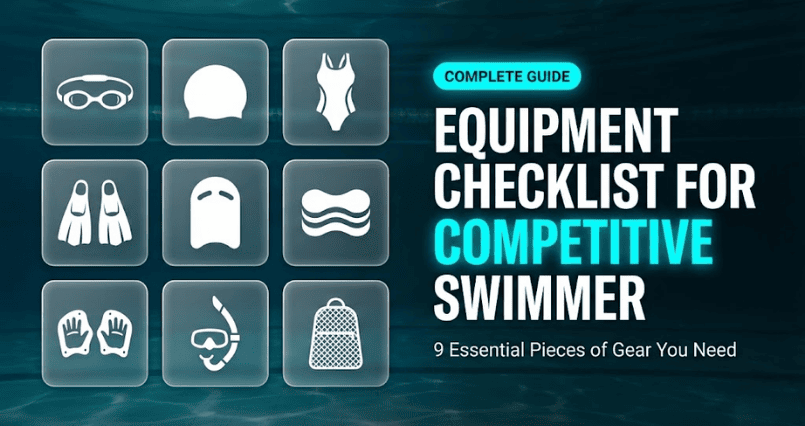
The right swim gear separates recreational swimmers from competitive athletes. Just like A pair of goggles that leaks mid-race or fins that slip off during kick sets can derail months of training. This guide covers the nine pieces of equipment every competitive swimmer needs, with specific recommendations by skill level and budget.
Whether you’re a parent outfitting a young swimmer for their first travel meet or a teenager building your training bag, this breakdown will help you buy smart and avoid wasting money on gear you’ll replace in three months.
Lets dive in..
1. Competition Goggles
Two main types of goggles dominate competitive swimming:
- Gasket goggles with soft silicone seals and
- Swedish-style goggles with hard plastic frames that rest directly on the eye socket.
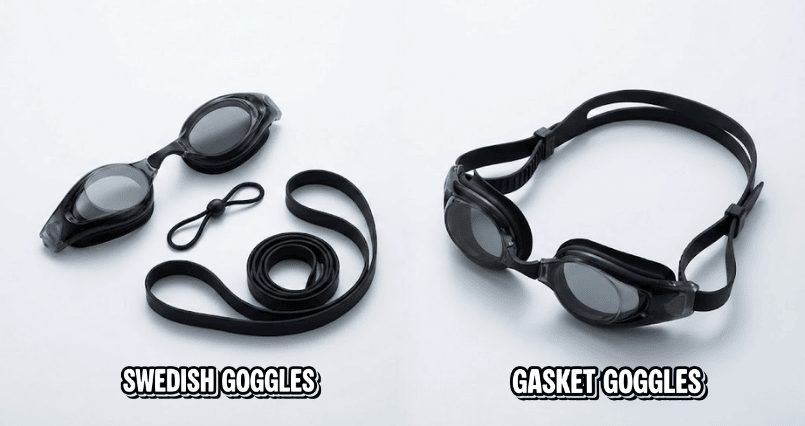
Gasket goggles work well for swimmers who prefer cushioned comfort and watertight seals without adjustment.
Swedish goggles allow precise customization—you assemble them yourself, setting the nose bridge width and strap tension to your exact specifications. Most swimmers under 14 do better with gasket styles; the Swedish learning curve can frustrate younger athletes.
How to test fit: Press the goggles against your eye sockets without the strap. They should create light suction and stay in place for 2-3 seconds.
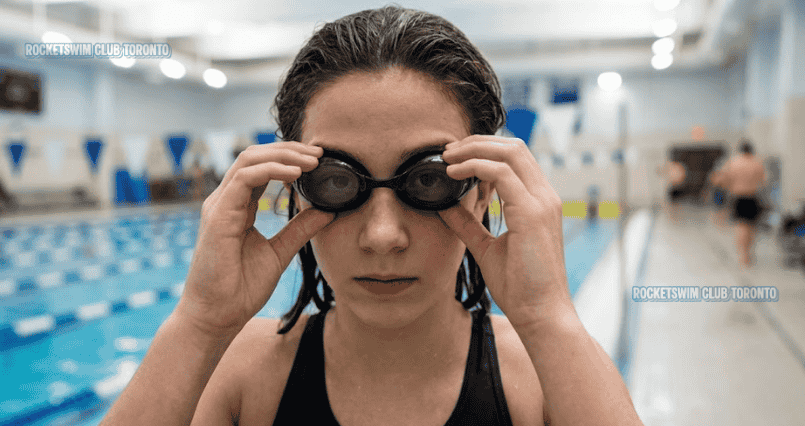
If they fall immediately, the seal shape doesn’t match your face. In this case you can try a different model
Budget options ($20-30): Speedo Vanquisher 2.0, TYR Socket Rockets.
Mid-range ($30-60): Arena Cobra Ultra Swipe, Speedo Fastskin Speedsocket 2.
Premium ($80+): Arena Cobra Core, TYR Tracer-X Elite Mirrored.
2. Silicone Swim Cap
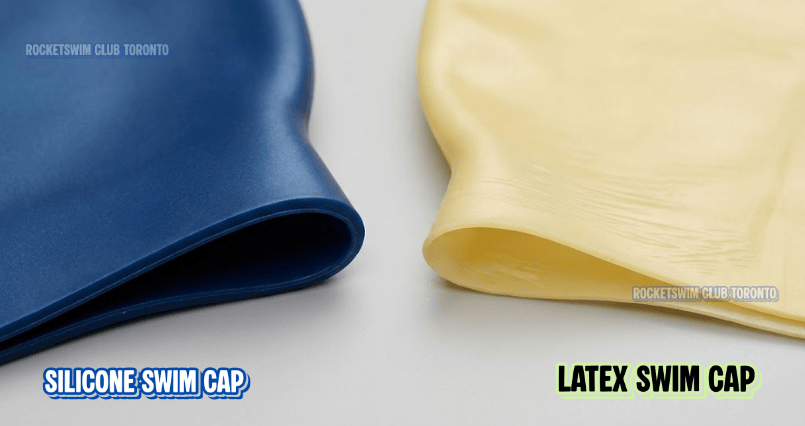
Silicone caps last longer than latex and create less friction through the water. Latex tears easily, especially when pulled over long hair, and degrades faster when exposed to chlorine. Lycra caps offer comfort but provide almost no hydrodynamic benefit—they’re better suited for recreational swimming or as an underlayer.
At competitions sanctioned by Swimming Canada or USA Swimming, swimmers typically wear their club’s official team cap. Most clubs require athletes to purchase team caps before their first meet. For daily training, any quality silicone cap works. Expect to replace training caps every 4-6 months as the material stretches and thins.
Swimmers with long hair often use the double-cap method: a cap underneath to contain hair, with a silicone cap over top for speed.
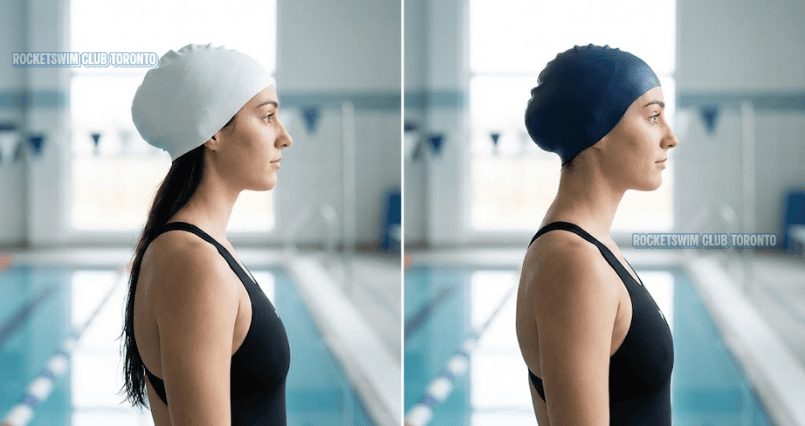
This combination reduces the dome shape that forms when thick hair bunches under a single cap. The caps also protect hair from chlorine contact.
3. Chlorine-Resistant Training Suit
Training suits and tech suits serve different purposes. A training suit handles 8-15 hours per week in chlorinated water; a tech suit compresses muscles and reduces drag for competition.
Polyester and PBT (polybutylene terephthalate) blends resist chlorine breakdown far better than nylon. A quality training suit in polyester/PBT holds its shape and color for 6-12 months of heavy use. Nylon suits fade and sag within 8-12 weeks under the same conditions. Check the fabric content label before purchasing—aim for at least 50% polyester.
Fit matters for technique feedback. A suit that’s too loose creates extra drag and masks inefficiencies in body position. When trying on suits, perform a few squats and simulate arm circles to test mobility.
For age-group swimmers in the Greater Toronto Area and across Canada, Swimming Canada’s tech suit rules allow technical suits starting at 12 years old for designated meets. Before that age, standard training suits are required at all competitions.
Our expert coaches at Rocket Swim Club can clarify which meets have tech suit designations and which don’t.
4. Training Fins
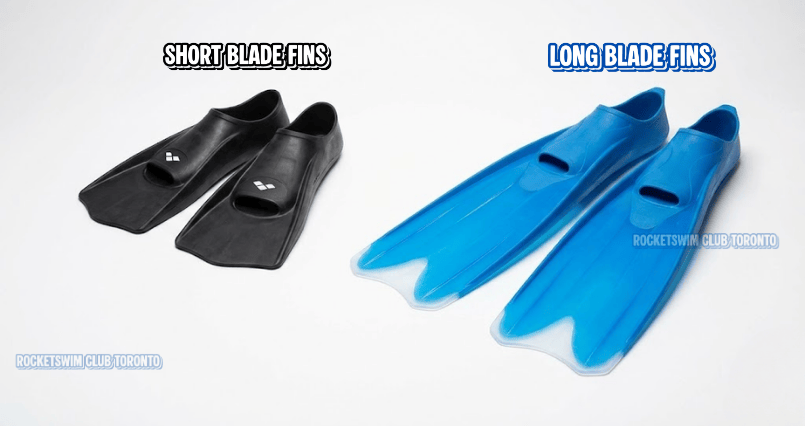
Short blade fins (typically 6-8 inches from heel to tip) dominate competitive swim training. It builds ankle flexibility, increases kick tempo, and strengthens legs without changing your stroke mechanics.
On the other hand, long blade fins used in snorkeling generate too much propulsion and don’t translate to actual race speed. Fin stiffness also affects training load.
Softer fins work well for younger swimmers and those developing ankle flexibility. Stiffer fins require more power output and suit experienced swimmers building speed and strength. Starting with overly stiff fins can strain ankles and knees, especially during fly kick sets.
Sizing runs differently than shoes. Fins should fit snugly without cutting off circulation. A fin that slips during push-offs creates blisters and reduces propulsion. Most swimmers go half a size smaller than their street shoes.
When to Upgrade Your Fins
Upgrade when your current fins flex too easily during fast kick sets—you should feel resistance through the entire downbeat.
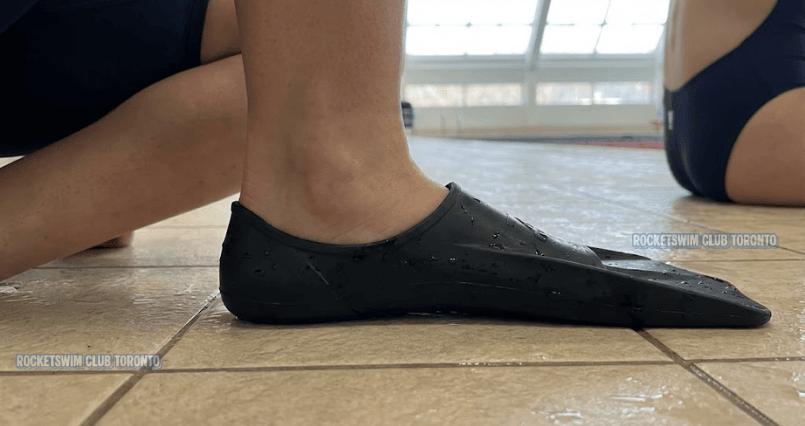
Swimmers who’ve trained consistently for 1-2 years often move from soft silicone fins to firmer rubber compounds. Signs you’re ready: your kick feels effortless in fins, you can maintain kick speed without fins matching your fin speed, and your ankles no longer feel tight after fin sets. Your coach can assess when progression makes sense.
5. Kickboard
Kickboards isolate leg work from arm stroke, allowing focused conditioning of your freestyle, fly, or breaststroke kick.
Traditional rectangular boards offer stSwability for beginners. Streamlined shapes with cutouts reduce drag and suit swimmers working on speed rather than endurance.
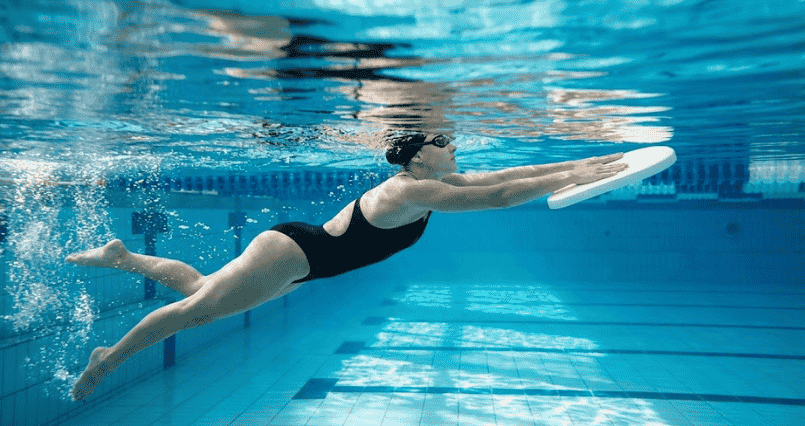
Many coaches, including those trained in Eastern European methodology like the coaching staff at Rocket Swim Club in Toronto, limit kickboard use during certain phases of training. Holding a board in front elevates the head and drops the hips, creating a body position that doesn’t transfer to actual swimming.
Used strategically, kickboards build leg power. If overused, they can reinforce poor alignment..
6. Pull Buoy
A pull buoy floats between your thighs, can lift your hips to the surface and eliminate your kick from the stroke. This isolation lets you focus entirely on arm mechanics—catch, pull, recovery—without worrying about body position.
The buoyancy reveals how much you rely on your kick for balance. Swimmers with weak core engagement or asymmetrical pulls notice rotation problems immediately when the kick isn’t there to compensate. If you snake through the water or veer into lane lines during pull sets, that’s feedback about stroke symmetry.
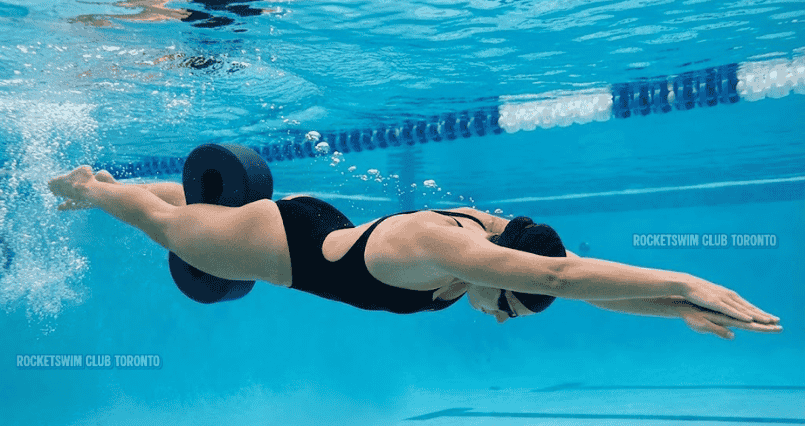
Coaches pair pull buoys with paddles for strength sets targeting the shoulders, back, and chest. Use caution: this combination loads the shoulders significantly. Swimmers newer to pull work should master buoy-only sets before adding paddles.
7. Hand Paddles
Paddles increase the surface area of your hand, creating more resistance through the water and building upper body strength. They also amplify stroke flaws—if your catch is weak or your elbow drops, the paddle will slip or twist, giving immediate feedback on technique problems.
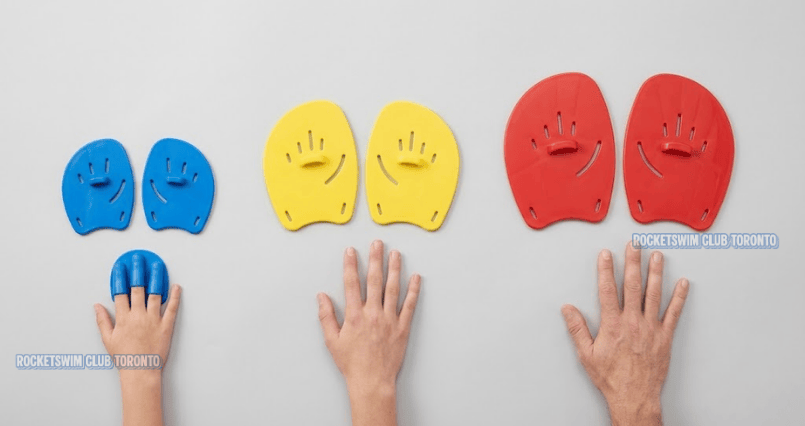
Size progression protects shoulders. Starting with paddles too large for your strength level stresses the rotator cuff and can cause overuse injuries that sideline swimmers for weeks.
Begin with finger paddles or small full-hand paddles no bigger than your palm. After 6-12 months of consistent paddle work with no shoulder issues, move up one size.
Sizing guide
Match paddle size to hand size and training age. A 14-year-old with two years of competitive experience should use smaller paddles than a 14-year-old with five years. Measure from the base of your palm to your fingertip—your first paddles should extend no more than a centimeter beyond that length.
8. Center-Mount Swim Snorkel
Swim snorkels remove breathing from your stroke, letting you focus on body position, rotation, and arm mechanics without turning your head. The center-mount design sits in front of your face rather than off to the side like a scuba snorkel, which would interfere with your arm recovery.
Coaches value snorkel sets for technique correction. When swimmers don’t need to breathe, they can maintain a neutral head position and concentrate on one element at a time—high elbow catch, hip rotation timing, streamlined body line. This focused practice accelerates skill development.
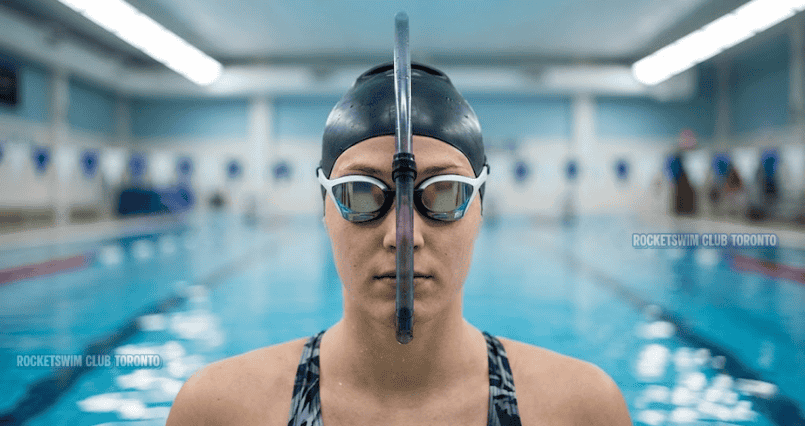
Advanced swimmers add cardio caps—small attachments that restrict airflow—for hypoxic training. Beginners should skip these until they’re comfortable with basic snorkel mechanics.
Common mistakes include lifting the head (flooding the tube), exhaling too weakly (leaving stale air in the tube), and positioning the snorkel too high (creates drag and leaks).
9. Mesh Equipment Bag
A separate bag for training equipment keeps gear organized. Mesh fabric allows airflow so wet equipment dries between sessions rather than sitting damp in a closed backpack. Solid bags trap moisture and create odor problems within days.
Size the bag to fit everything on this list: fins, paddles, snorkel, kickboard, pull buoy, plus a backup pair of goggles and cap. Most swimmers need a bag at least 24 inches long to accommodate fins without bending them. Look for reinforced handles—loaded gear bags get heavy.
Label your gear clearly. At team practices, especially at busy pools across the Greater Toronto Area, identical equipment piles up on deck. Write your name in permanent marker inside fins, on paddle straps, and on the snorkel mouthpiece. Many swimmers add colored tape to distinguish their equipment at a glance as well.
How to Choose the Right Gear for Your Level
Not every swimmer needs every piece of equipment immediately. Match your gear to your training stage and let your coaches guide the progression.
Beginner Competitive Swimmer (First 1-2 years)
Start with the basics: goggles, cap, training suit, short fins, and a kickboard. This covers your first season without overwhelming you with equipment. Avoid hand paddles during this phase—your stroke technique needs development before adding resistance that could reinforce bad habits. Soft, flexible fins protect developing ankles while building kick strength.
Parents enrolling children in competitive programs at clubs throughout the GTA—including Rocket Swim Club’s Beginner levels—can expect coaches to provide guidance on specific brands and models during assessment sessions. Our club’s approach emphasizes matching gear to developmental readiness rather than buying everything at once.
Intermediate (2-4 years, competing at regional/sectional level)
Add a center-mount snorkel, pull buoy, and small paddles to your bag. Your stroke mechanics have stabilized enough to benefit from isolation work and resistance training.
Consider upgrading to stiffer fins if your current pair bends too easily during speed sets. At this stage, you’re likely training 6-10 hours per week and attending provincial-level meets.
Advanced (National qualifiers, 5+ years)
Progress to medium or large paddles based on shoulder strength and training volume. Add resistance tools like drag suits or parachutes if your coach programs them. Tech suits become relevant for championship meets—time trials, provincials, and national qualifiers. The investment makes sense when hundredths of seconds matter for qualifying times.
How to Take Care of Your Swimming Equipment
Chlorine breaks down rubber, silicone, and fabric over time. A few habits extend the life of everything in your bag and save money over the course of a season.
After every practice: Rinse all equipment in fresh, cool water. This removes chlorine residue before it can degrade materials. Takes 30 seconds and adds months to gear lifespan. Most pools have rinse stations near the locker rooms.
Never leave wet gear in closed bags. The combination of moisture, heat, and darkness creates problems within 24 hours. Empty your bag and let everything air dry completely before packing for the next session.
Goggle care: Don’t touch the inside of the lenses. The anti-fog coating wears off faster from finger oils and wiping than from chlorine exposure. Shake water out and let them air dry. Store in a protective case, not loose in your bag where they can get scratched.
Suit care: Rinse in cold water immediately after swimming. Gently press water out and lay flat to dry away from direct sunlight. Heat and UV degrade spandex blends quickly. Alternating between two training suits extends the life of both.
What Equipment You Should Take in Your Competitive Swim Bag
Quality gear accelerates technique development. Goggles that seal properly let you focus on your stroke rather than clearing water. Fins that fit correctly build kick power without causing blisters. Suits that resist chlorine maintain their shape season after season.
Buy according to your training level. Beginners need basics; advanced swimmers need specialized tools. Upgrade as your coach recommends, not because a new product looks faster.
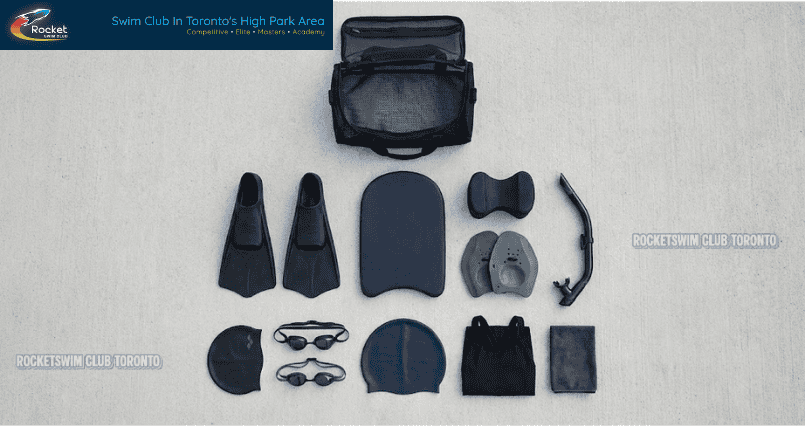
If you’re looking for specific brand recommendations or wondering what gear your swimmer needs for the upcoming season, coaches at Rocket Swim Club provide equipment guidance during tryouts and parent meetings. The club’s training philosophy, developed from USSR-era methodology by coaches with national team backgrounds and refined with modern performance tracking through Sportecos technology, emphasizes matching the right tools to each swimmer’s developmental stage.
Families across the Greater Toronto Area can schedule tryouts through the club’s website to connect with RocketSwim’s coaching staff and get personalized equipment recommendations.