


Rocket Swim Club | Toronto, ON
Breaststroke looks easy from the pool deck.
But once you try to swim it with any speed, the cracks show fast. Small timing errors and position mistakes create outsized drag in breaststroke because of its stop-and-go rhythm.Unlike freestyle, where you’re always moving forward, every breaststroke cycle includes a phase where your body is completely out of streamline.
That’s where technique falls apart. Here are seven common mistakes, why they happen, and drills to fix them.
Why Bad Technique Shows Up More in Breaststroke Than Any Other Stroke
Breaststroke is the slowest competitive stroke for a reason. Arms and legs recover underwater, so your body pushes through more frontal drag than in any other stroke. A timing error that costs you a tenth of a second in freestyle can cost three to five tenths in breaststroke because you lose the glide entirely. When the glide disappears, you’re fighting the water instead of riding it. That’s why fixing even minor technique issues produces noticeable speed gains almost immediately.
| Rocket Swim Club offers competitive and recreational programs across multiple pool locations in Toronto’s west end, with coaching rooted in Eastern European training methodology. Swimmers from across the Greater Toronto Area train with our former national team coaches. |
How to Spot Your Own Breaststroke Mistakes
Before you fix anything, figure out what’s going wrong. Swim 4 x 25m breaststroke at a moderate pace and pay attention to where it feels stuck. Then match what you feel to this list:
- Bobbing up and down instead of moving forward → Mistake #1 (timing) and #5 (body position)
- Legs working hard but barely moving → Mistake #3 (kick width) and #4 (knee position)
- Out of breath quickly → Mistake #6 (breathing) and #7 (rushing)
- Arms tired but not getting faster → Mistake #2 (arm pull)
Have a friend film you underwater with a phone in a waterproof pouch. Thirty seconds of footage reveals more than 30 minutes of guessing.
Mistake #1 – Poor Pull-Kick Timing
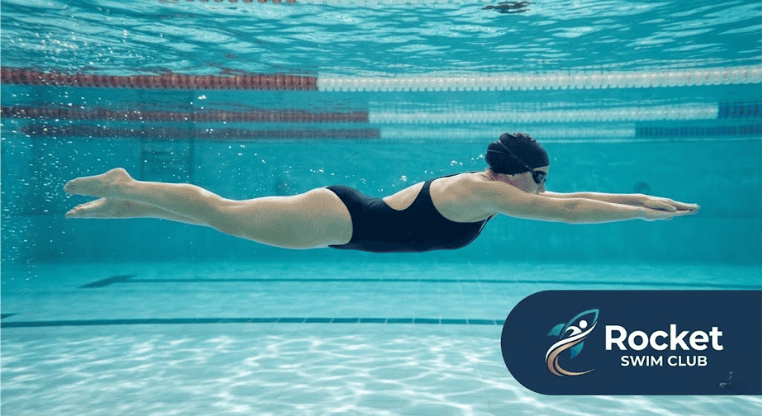
How Poor Pull-Kick Timing Looks
Pulling and kicking at the same time, or pausing during the breath instead of during the glide. It looks like treading water. Lots of movement, very little forward progress.
Why It Happens
Anxiety about breathing. Swimmers rush to get their head up, which triggers the kick too early. It’s also common in people who learned breaststroke casually and never separated the phases.
How to Fix It
Use the cue: “Pull… breathe… kick… glide.” The pause belongs in the glide, not in the breath. Drill: 2-kick-1-pull. Do two kicks per arm cycle to force separation. Swim 4 x 25m with this pattern, 15 seconds rest between reps.
Mistake #2 – Pulling Arms Too Wide (or Too Far Back)
How This Mistake Looks
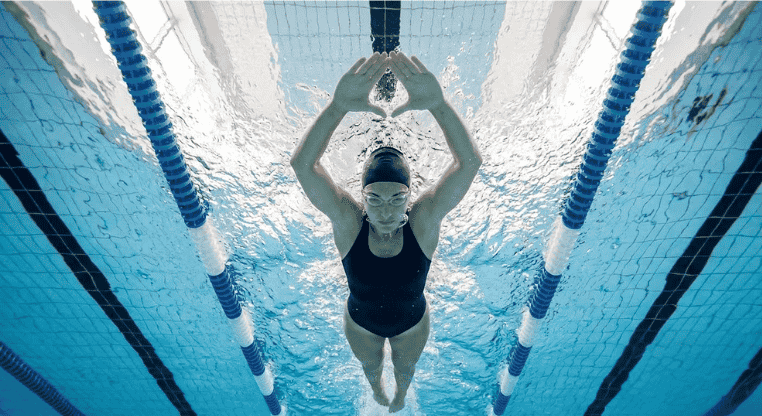
Elbows sweep past the shoulders, arms go wide, or hands pull all the way to the hips. Looks powerful but creates a huge frontal area and kills forward momentum.
Why It Happens
Swimmers assume bigger movements mean more power. Common in people stronger in freestyle who carry over a long pull habit.
How to Fix It
Keep elbows in front of your shoulders at all times. If you can’t see them in your peripheral vision, you’ve pulled too far. Think of the pull as a heart shape, not a circle. Drill: Forearm sculling – float face-down and scull with just forearms, keeping elbows nearly still. For competitive swimmers: work on early vertical forearm to catch more water with less arm extension.
| Need a coach’s eye on your pull? Rocket Swim Club’s team specializes in stroke mechanics. Private lessons are available for all ages and levels at our Toronto locations. |
Mistake #3 – Kicking Too Wide
How This Mistake Looks
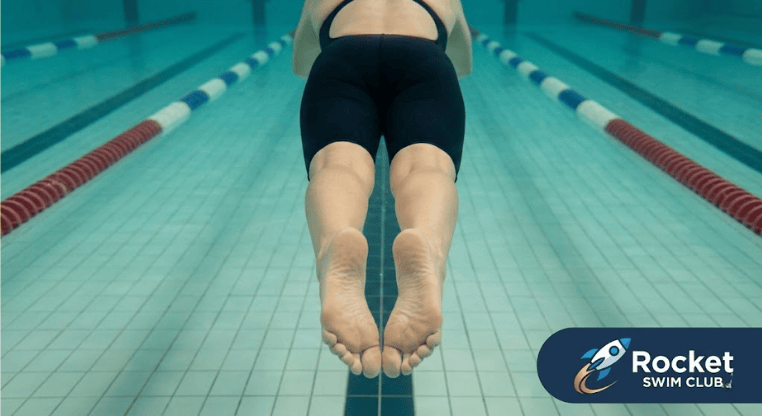
Knees go wider than the hips, sometimes wider than the shoulders. Feet splay outward. The kick looks big but the swimmer barely moves.
Why It Happens
Instinct says wider means more water displaced. But when knees point outward, the shin angle can’t grip the water. The water gets pushed sideways, not backward.
How to Fix It
Think: knees point down, not out. The propulsive surface is the inside of your shins and feet. Drill: Streamline On Back kick (SLOB) – lie on your back in streamline and do breaststroke kick. If your knees break the surface, they’re too wide. Wall drill: place feet flat against the pool wall with ankles rotated outward and push off gently to feel the correct foot position.
Mistake #4 – Drawing Knees Up to the Stomach
How This Mistake Looks
During the kick recovery, the swimmer pulls knees up underneath them instead of drawing heels back toward the hips. This creates a large drag pocket under the torso.
Why It Happens
It feels natural, like pulling your legs up before a jump. Tight hip flexors make it worse because the body can’t bring heels to hips, so it compensates by bringing knees to chest.
How to Fix It
Cue: “Heels to hips, not knees to chest.” Aim for roughly a 130–150 degree angle between thigh and body. Drill: Vertical kicking – in the deep end, hold the wall and do breaststroke kicks. Keep thighs still while feet do the work.
Mistake #5 – Sinking Hips and Poor Body Position
How This Mistake Looks
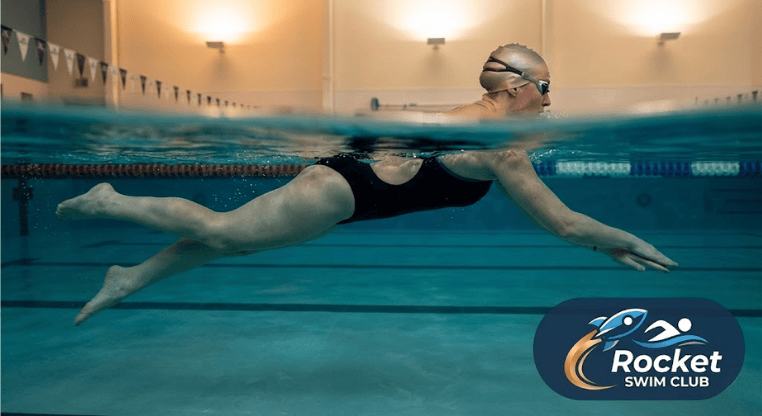
Hips sink low every stroke cycle. The body tilts close to vertical during the breath, then crashes back flat. It looks like fighting the water instead of riding on top of it.
Why It Happens
Three causes: lifting the head too high during the breath (so hips drop to compensate), recovering arms too high above the surface (same effect), and weak core engagement.
How to Fix It
Keep the breathing motion small. During arm recovery, hands push forward at or just below the surface. Drill: Streamline kick on front (SLOF) – hold streamline, kick breaststroke, time your breathing lift without taking a pull. A pool noodle tucked under the hips helps beginners feel the correct position for a few laps.
| Body position is what coaches catch fastest in person. Rocket Swim Club’s adult and masters programs pair focused technique work with Sportecos performance tracking, so you can see progress term to term. |
Mistake #6 – Breathing at the Wrong Moment
How This Mistake Looks
The swimmer breathes when the arms have already finished pulling. Head comes up with no arm support, so the whole body sinks. Or the swimmer holds their breath the entire cycle and exhales and inhales in one panicked burst.
Why It Happens
Fear of not getting enough air. Beginners wait until the head is at its highest point before breathing, which is too late. Competitive swimmers sometimes breathe too late because they’re focused on the pull.
How to Fix It
Exhale steadily into the water during the glide. Start the inhale as soon as the outsweep begins and your shoulders rise naturally. By the time your hands sweep inward, the breath should be done. Cue: “Breathe WITH the pull, not AFTER the pull.” For beginners: practice standing in shallow water, doing the arm motion and timing the breath without the pressure of actually swimming.
Mistake #7 – Rushing the Stroke (Skipping the Glide)
How This Mistake Looks
The swimmer goes straight from kick into the next pull with zero pause. High stroke rate, lots of splashing, barely any forward movement.
Why It Happens
Swimmers panic about losing momentum. Competitive swimmers sometimes confuse faster stroke rate with faster swimming. In breaststroke, distance per stroke matters more than turnover for most events.
How to Fix It
Glide for one to two seconds after each kick. Count: “one-Mississippi” in streamline before the next pull. Drill: Stroke count challenge – swim 25m and count your strokes, then repeat trying to reduce the count. This forces a longer glide and more distance per cycle. For competitive swimmers: sprint breaststroke (50m) uses less glide than distance (200m), but even in a sprint, the glide should never be zero.
Dryland Exercises That Help Fix Breaststroke Mistakes
These five exercises target the flexibility and strength gaps behind the mistakes above.
- Frog stretch – soles of feet together, knees out, press knees toward the floor. Opens hip adductors for kick range.
- Ankle circles and dorsiflexion stretches – sit on heels, gently rotate ankles. Hold 20 seconds each direction.
- Hip flexor lunge stretch – kneel in a lunge, push hips forward. Gives range to draw heels back instead of knees to chest.
- Plank hold (30–60 seconds) – core stability to keep hips up during the stroke.
- Standing arm imitation – practice the pull pattern slowly on land, focusing on keeping elbows forward.
| Rocket Swim Club’s competitive programs include structured dryland alongside pool training. Find a session near you in the Greater Toronto Area. |
How to Set a Practice Set for Breaststroke Correction
Take this to the pool. Total distance is roughly 800m.
| Warm-up | 200m easy mix |
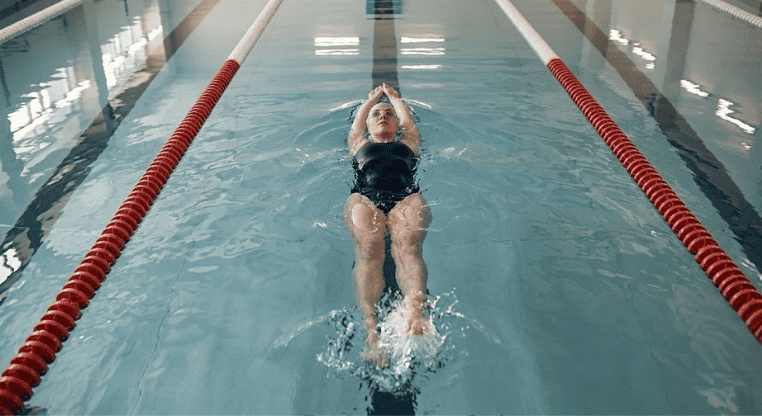
| Set 1 | 4 x 25m breaststroke kick only (SLOB drill, knees narrow). 15 sec rest. |
| Set 2 | 4 x 25m pull only with pull buoy (compact pull, EVF). 15 sec rest. |
| Set 3 | 4 x 50m full breaststroke, count strokes. Reduce count each 50. 20 sec rest. |
| Cool-down | 200m easy freestyle |
Focus on one correction per set. Don’t try to fix everything at once.
Conclusion
Breaststroke rewards patience and precision over power. Most of these mistakes come down to rushing, compensating for fear, or carrying habits from other strokes.
Pick the one mistake that sounds most like what you feel in the water. Work on that single correction for two or three sessions before moving on. Trying to fix everything at once usually means nothing sticks.
If you’re in the Greater Toronto Area and want hands-on coaching, Rocket Swim Club offers programs for every level. Our coaching team has spent a decade helping Toronto swimmers clean up exactly these patterns. Check our tryout schedule and come see the difference.
Frequently Asked Questions
Q: What is the hardest part of breaststroke to get right?
Timing. The pull-breathe-kick-glide sequence needs all four phases in order with the right pause. Most other mistakes get easier to fix once timing is correct.
Q: Why do my hips sink during breaststroke?
Usually because you’re lifting your head too high when you breathe. Your body works like a seesaw. Keep the breathing motion smal.
Q: How do I know if my breaststroke kick is wrong?
If your legs work hard but you don’t move forward, your kick needs attention. Try the SLOB drill. If your knees break the surface, you’re kicking too wide.
Q: Should I always glide in breaststroke?
Yes, but glide length depends on the distance. Even in a 50m sprint, a short glide beats a rushed recovery.
Q: Can bad breaststroke technique cause injury?
Yes. A wide kick with flared knees stresses the medial collateral ligament. This is called “breaststroker’s knee” and it’s one of the most common swimming injuries.