

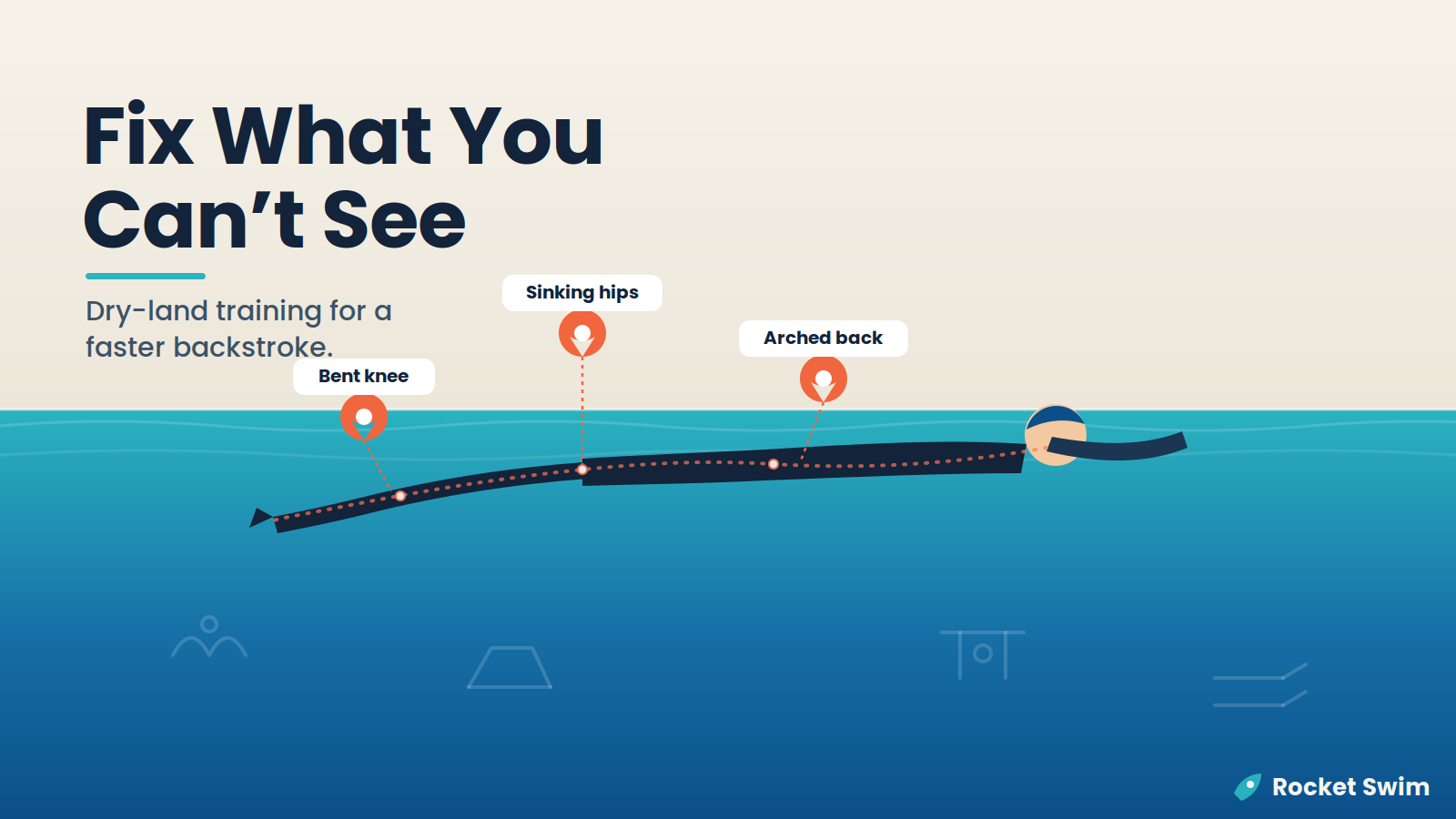
Backstroke is yet another stroke you can’t watch yourself swim. You can’t see your hips sink, your back arch, or your legs trail low, so a lot of the fixing happens on land before you push off the wall.
Solid dry-land work buys you a straighter body line, a stronger pull, legs that ride near the surface, and shoulders that last through a long set. At Rocket Swim Club in the Greater Toronto Area, coaches fold this land training into backstroke swimming practice.
Why dry-land work changes your backstroke
Backstroke runs on a chain of muscles working together. Up top, your lats and core drive the pull and keep your spine steady. Below the hips, your glutes, hamstrings, and quads power the kick, while your shoulders and ankles set how far you can reach and how well you point your toes. What makes it tricky: you swim it on your back, so the muscles that hold your body flat work in a position you rarely train anywhere else. Strength built on land shows up as more force per stroke. That means you either go faster at the same effort or hold your speed while tiring less. A coach can spot which muscle is letting you down, part of the imbalance Rocket Swim describes.
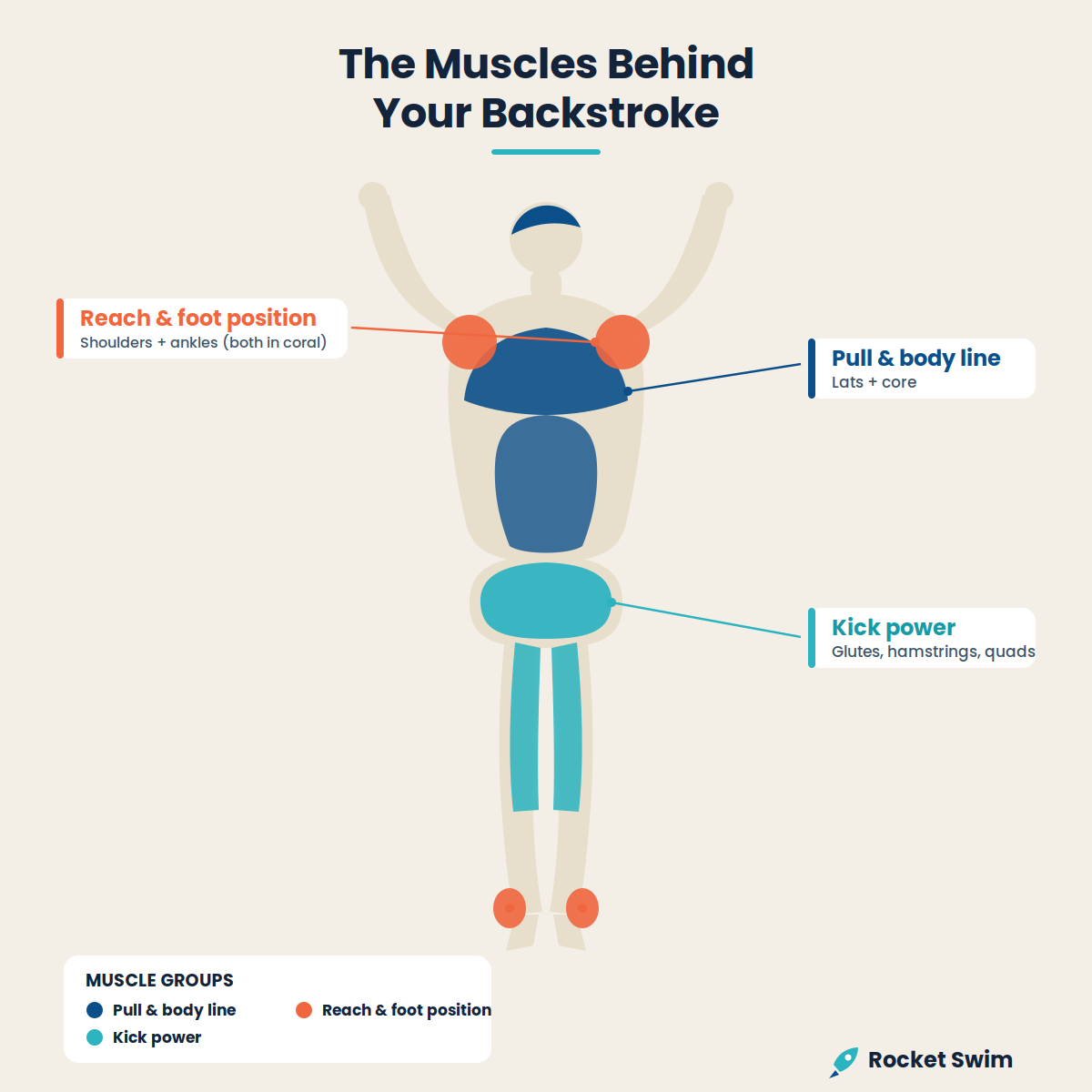
What muscles does backstroke use?Backstroke uses the latissimus dorsi and core for the pull and body line, the glutes, hamstrings, and quadriceps for the kick, and the shoulders and ankles for reach and foot position. |
Do dryland exercises really make you swim backstroke faster?Yes, indirectly. Dry-land training adds strength and stability that in-water laps can’t build alone, so you apply more force per stroke and hold better body position. That carries over to a faster, less tiring backstroke. |
Warm up first
Cold muscles reach short and strain easily, so start every session with five to eight minutes of movement. Keep it dynamic; save static stretching for the end.
Arm swings and shoulder circles, forward and back, to open the overhead path. Leg swings, front to back and side to side, for the hips. Band pull-aparts to wake up the rear shoulder. Ankle rocks and slow squats to loosen the ankles and hamstrings.
The goal is warm, not tired. If you’re breathing hard after the warm-up, you overdid it.
Body position & stability exercises
A flat, stable spine lets your arms and legs move freely without your hips dropping. Most backstroke faults trace back to a spine that collapses under load. These four build it.
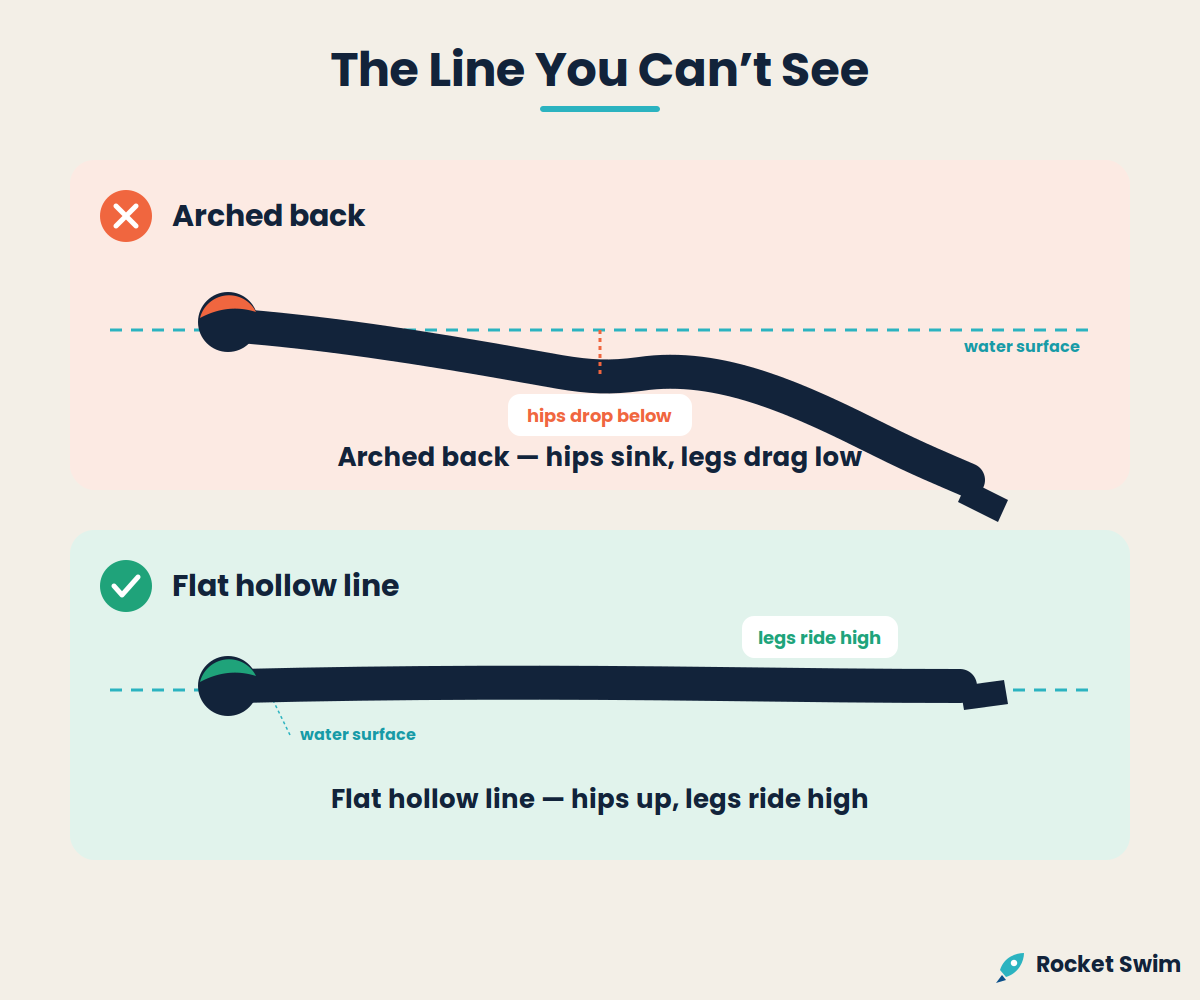
Hollow hold. Lie on your back, press your lower back flat into the floor, and lift your shoulders and legs a few inches, mirroring your streamline. If your lower back lifts off the floor, you’ve lost it; that arch is what sinks your hips in the water. Hold for 20 to 30 seconds, three rounds.
Deadbug with a band. Anchor a band overhead, hold it with straight arms, and lower one leg at a time while keeping your back flat. Your spine stays still while your limbs move, which is the exact demand of the stroke.
Glute bridge with a diagonal reach. Bridge your hips up, then reach one arm overhead. You’ll feel the tension that holds your line through the overhead reach.
Rotisserie roll. Lie long and rock slowly side to side, staying tight. This trains the roughly 30-degree body rotation that keeps your stroke and your backstroke breathing balanced.
What exercises fix an arched back in backstroke?An arched back comes from weak anti-extension strength. The hollow hold and deadbug teach your core to keep the spine flat, while glute bridges build the hip strength that stops your lower back over-arching. |
Strength for a stronger pull and push-off
Your pull is the engine of backstroke and your push-off sets up every length; both need strength built on land.
Pullover. On a bench, lower a weight behind your head and pull it back over your chest. This loads your lats through the same overhead arc as your pull while your core fights the arch.
Lat pulldown or pull-ups. Straight-up pulling strength for a stronger catch. Pull-ups need no machine; a pulldown scales the load precisely. Bands and weights let you progress either version at home, and our guide to the best swimming equipment for backstroke training covers what’s worth owning.
Russian twists. Sit tall, lean back, and rotate side to side.
Shooter squats. Single-leg squats that build the leg drive behind a fast push-off. Start with bodyweight; add a light dumbbell once your balance is solid.
Youth and adult swimmers can both use this list: beginners stay with bodyweight, stronger swimmers add load.
Leg & kick power
A good backstroke kick is a fast, straight-leg flutter that stays near the surface and comes from the hip, not the knee. Bending at the knee is the number one kick fault: it drops your shin, kills propulsion, and drags your legs low. Land work retrains the pattern.
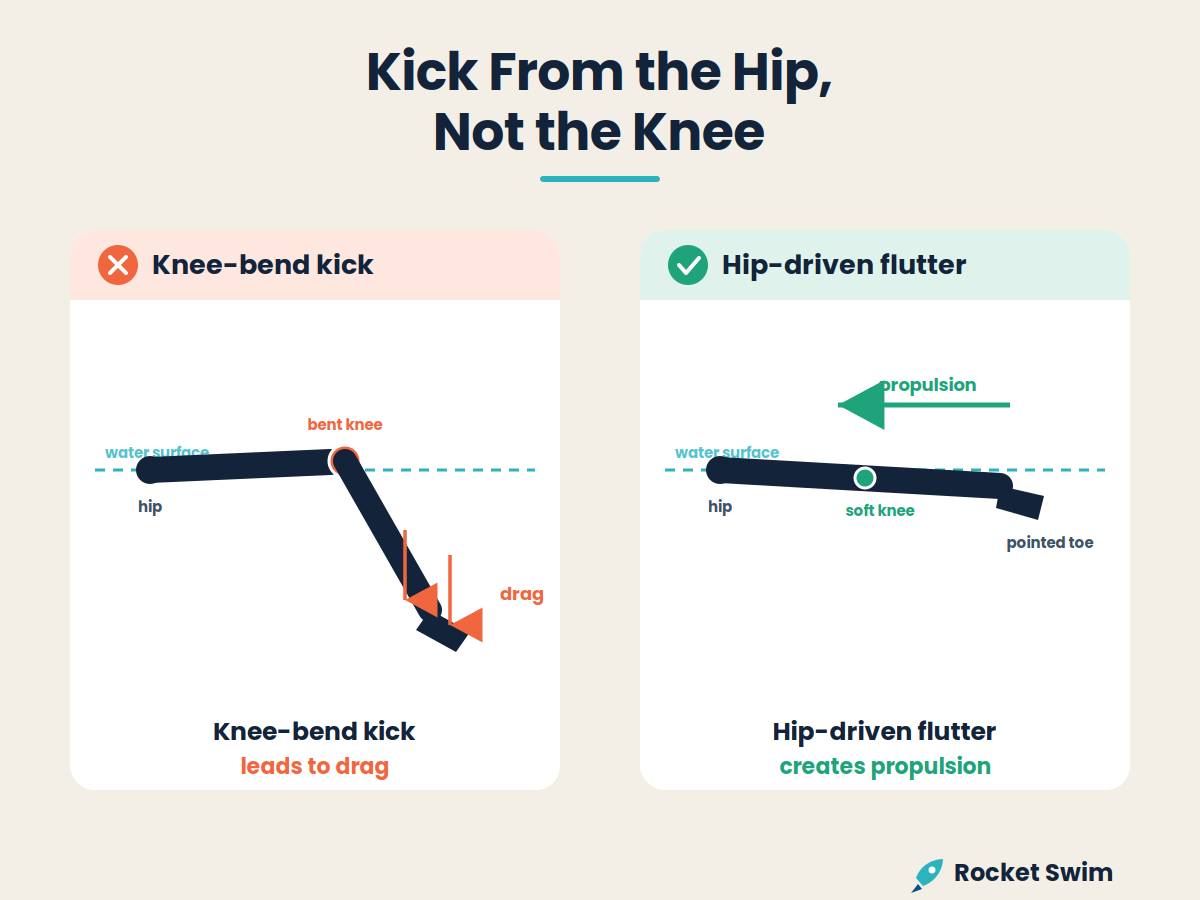
Prone flutter kick. Lie face down and kick with nearly straight legs, driving from the hip. This grooves the straight-leg action and builds the glutes and hamstrings behind it. Train the same pattern in the water with focused backstroke kick drills.
Glute bridge. Reps or a long hold build hip power and reinforce the flat spine that keeps your legs up.
Ankle mobility. Loose ankles put more foot surface on the water. Sit back on your folded feet for an ankle sit.
Stadium stairs. Optional explosive stair work sharpens the leg drive behind your starts and push-offs.
Flexibility & shoulder health
Backstroke asks your shoulders to swing overhead thousands of times per session, while lying on your back. That overhead-on-your-back position is exactly where the shoulder is most exposed, and shoulder pain shows up in a large share of competitive swimmers. Mobility work is your cheapest insurance.
Arm recoveries. Slowly trace the backstroke recovery path with each arm to build mobility through the overhead reach.
Band pull-aparts and external rotations. All that pulling overdevelops the front of the shoulder; these rebalance the back of it and the rotator cuff.
Pigeon pose. A hip opener that frees up cleaner leg action and rotation.
Stop any movement that pinches; sharp pain is a signal, not something to push through. If you already have a shoulder issue, clear your plan with a coach or physiotherapist first.
How do I protect my shoulders swimming backstroke?Protect your shoulders by balancing all that pulling with rear-shoulder and rotator-cuff work like band pull-aparts and external rotations, keeping your overhead mobility up, and stopping any movement that pinches. Clean technique matters just as much. |
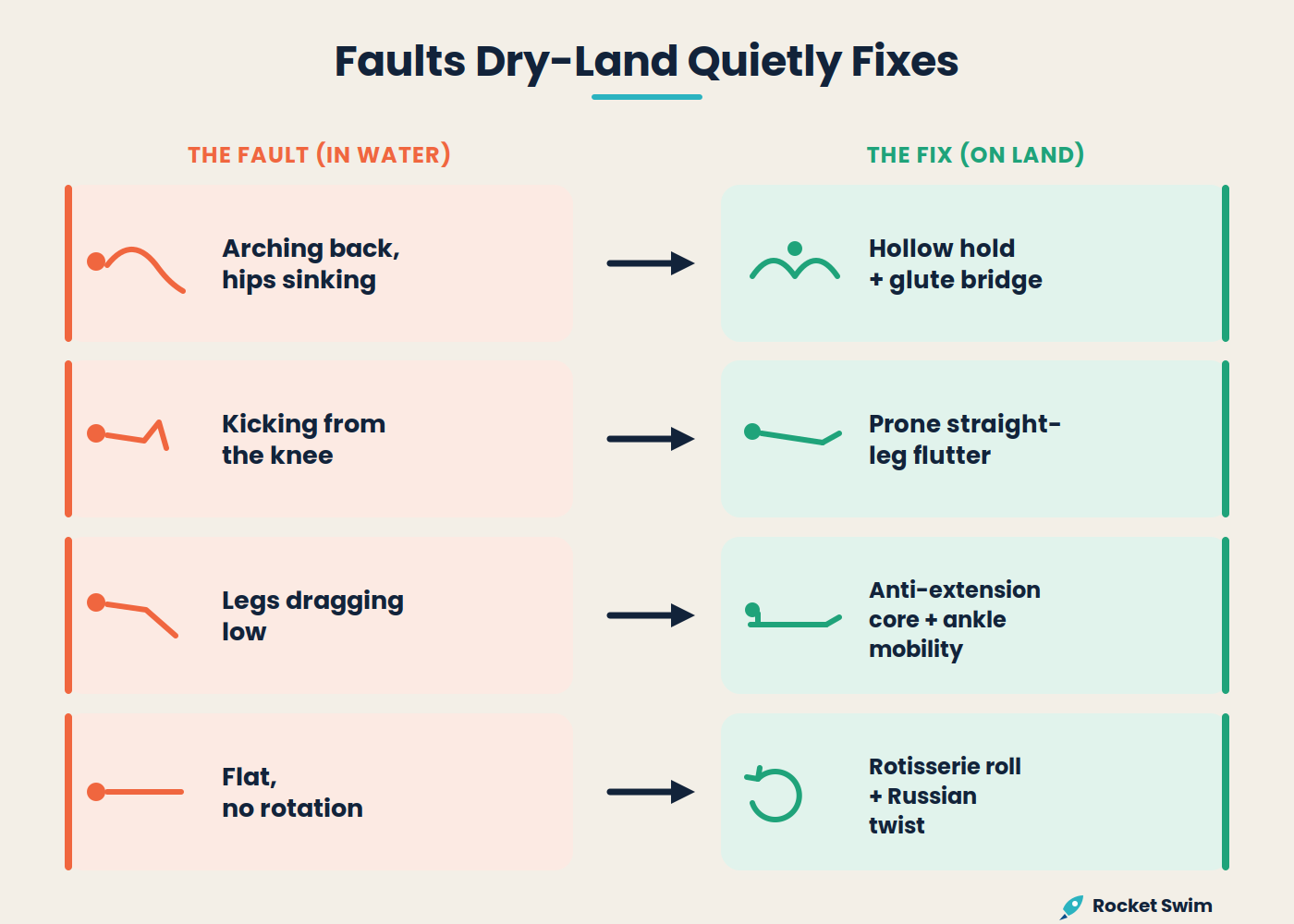
Backstroke faults dry-land quietly fixes
Most backstroke faults you feel in the water start with a strength or mobility gap you can close on land. Each fix below targets the exact muscle or joint letting the fault happen. Match the fault to the fix, then confirm the change with in-water backstroke drills for beginners and up.
| Fault in the water | What fixes it on land |
| Arching lower back, hips sinking | Hollow hold, glute bridge |
| Kicking from the knee | Prone straight-leg flutter kick |
| Legs dragging low | Core anti-extension work plus ankle mobility |
| Flat, rotation-less stroke | Rotisserie roll, Russian twist with reach |
How do I stop my legs sinking in backstroke?Legs sink when your hips drop and your core lets the spine arch. Strengthen anti-extension with hollow holds and deadbugs, build hip power with glute bridges, and keep your kick straight and shallow from the hip. |
Fitting dry-land into your week
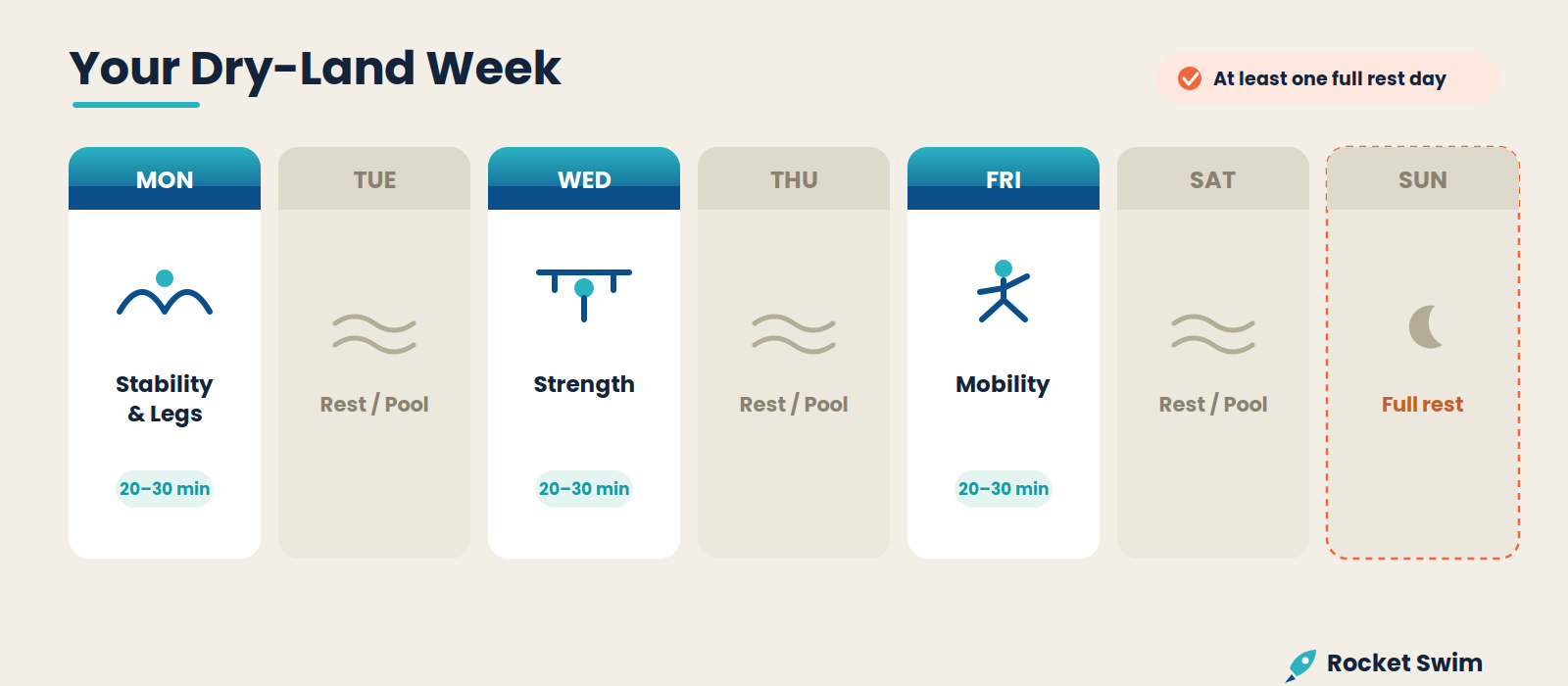
Two or three short sessions a week is fine. Stack them on pool days or right after practice, and keep at least one full rest day.
A simple week: stability and legs Monday, strength Wednesday, mobility Friday. Twenty to thirty minutes each is enough. Pair it with your 30-minute pool session plan so land and water reinforce each other.
Beginners start with fewer sets and bodyweight. As it gets easy, add load and a little explosive work.
| Rocket Swim Club’s coaches build dry-land into competitive and private lessons across the Greater Toronto Area and can tailor a plan to your stroke. See lesson options at rocketswim.com. |
How often should swimmers do dryland?Two to three short sessions a week works well for most swimmers. Schedule them on pool days or right after practice, keep sessions to 20 to 30 minutes, and take at least one full rest day. |
Can I train backstroke at home with no equipment?Yes. Hollow holds, deadbugs, glute bridges, prone flutter kicks, and pigeon pose all use only your bodyweight. A single resistance band adds pull-aparts and deadbugs. You only need weights once bodyweight work stops challenging you. |
Conclusion & next step
Land work fixes what you can’t see in the water: the sinking hips, the bending knee, the arch you never feel. You don’t need the whole list to start. Pick two, a hollow hold and a prone flutter kick, and add them after your next practice.
| When you want a plan built around your own stroke, Rocket Swim Club’s competitive, adult, and private lessons across the Greater Toronto Area put a coach on your dry-land. Reach us at info@rocketswim.com. |