

Swimming is a low-impact, full-body workout with well-documented physical and mental health benefits, and learning to swim is what puts those benefits within reach of everyone. Is swimming good for you?
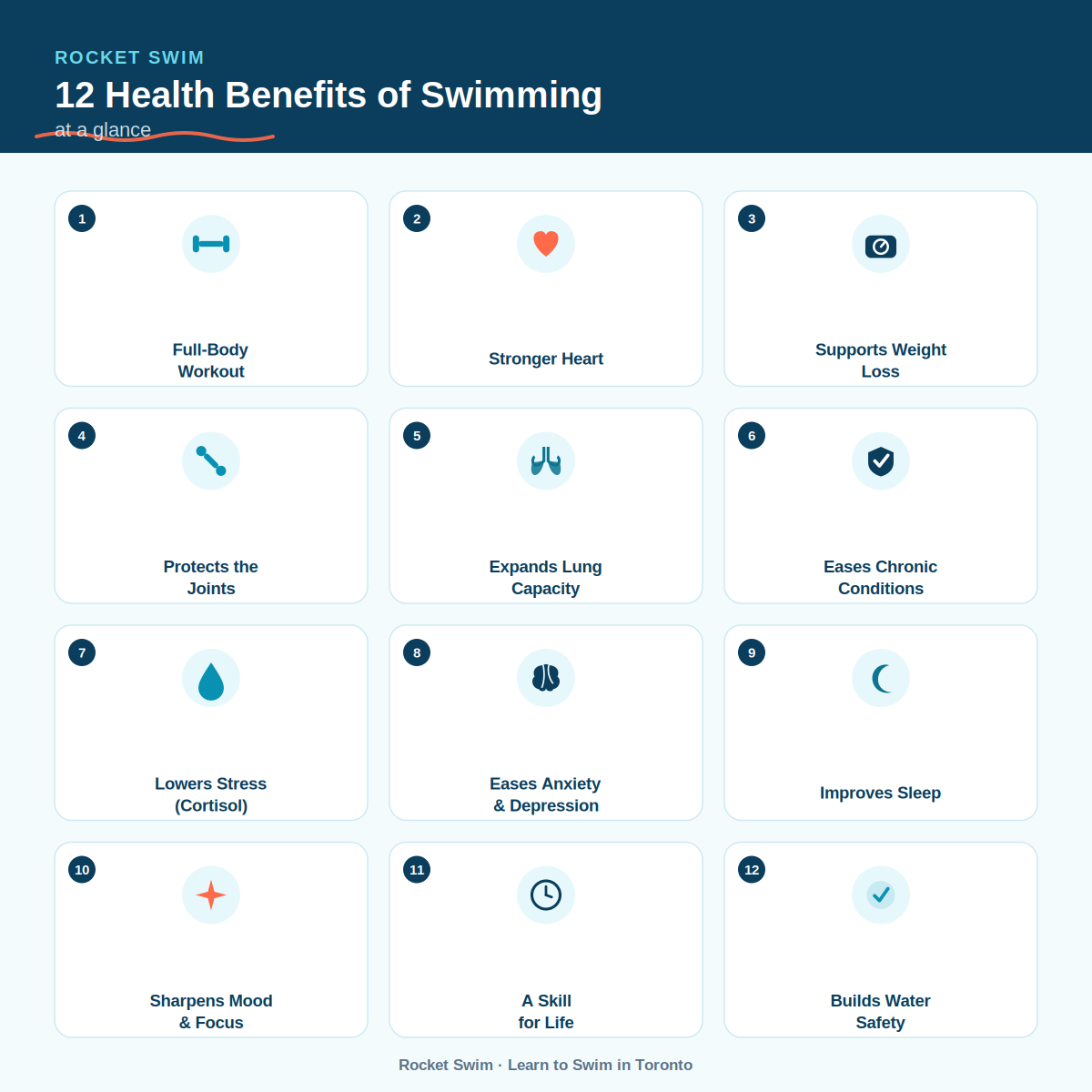
Yes. It strengthens the heart, protects the joints, supports weight management, improves breathing, and helps reduce stress and anxiety, making it a healthy, lifelong activity at every age. The physical gains come first: a stronger heart, easier weight management, resilient joints, and better breathing. The mental gains follow lower stress, steadier mood, and deeper sleep. And beyond both sits the reason it matters most in Canada: swimming is a lifelong life skill that keeps people safe in the water. Those threads run through everything below, from learn-to-swim programs to specific health conditions to water safety which is why everyone, at every age, should learn to swim.
This article is general information, not medical advice. Talk to your physician before starting a new exercise program, especially if you are managing a health condition.
The benefits begin with what swimming does for the body.
What Are the Physical Health Benefits of Swimming?
Swimming improves physical health in six main ways: it builds full-body strength, strengthens the heart, supports weight management, protects the joints, improves breathing, and eases the burden of some chronic conditions. Each of these comes from the same source — moving the whole body through water against constant, gentle resistance.
Is swimming a full-body workout?
Yes. Swimming is a full-body workout that engages almost every major muscle group at the same time. Every stroke recruits the arms, shoulders, lats, and deltoids to pull, the core to stabilise, and the glutes, quads, and legs to kick, so the whole body works in one continuous motion.
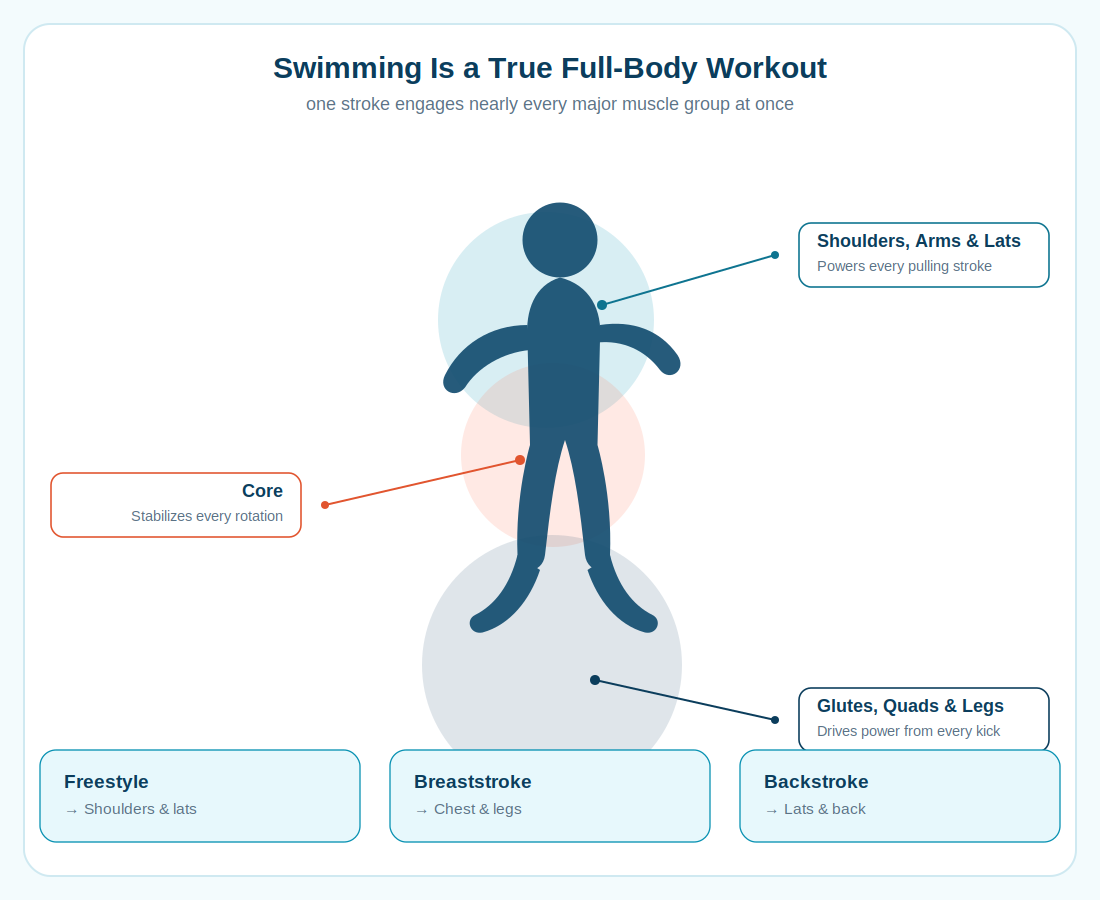
Water is roughly 800 times denser than air, so every movement meets resistance in a way it never does on land. That resistance is what turns a swim into strength and cardiovascular conditioning at the same time and because it works the whole body at once, swimming puts that effort where it matters most: the heart.
How does swimming improve your heart health?
Swimming strengthens the heart and is associated with lower cardiovascular risk, improving overall cardiovascular health the fitness of the heart, blood vessels, and circulation. Regular aerobic exercise such as swimming helps lower blood pressure, reduce resting heart rate, and improve cholesterol profiles, all of which reduce strain on the heart over time.
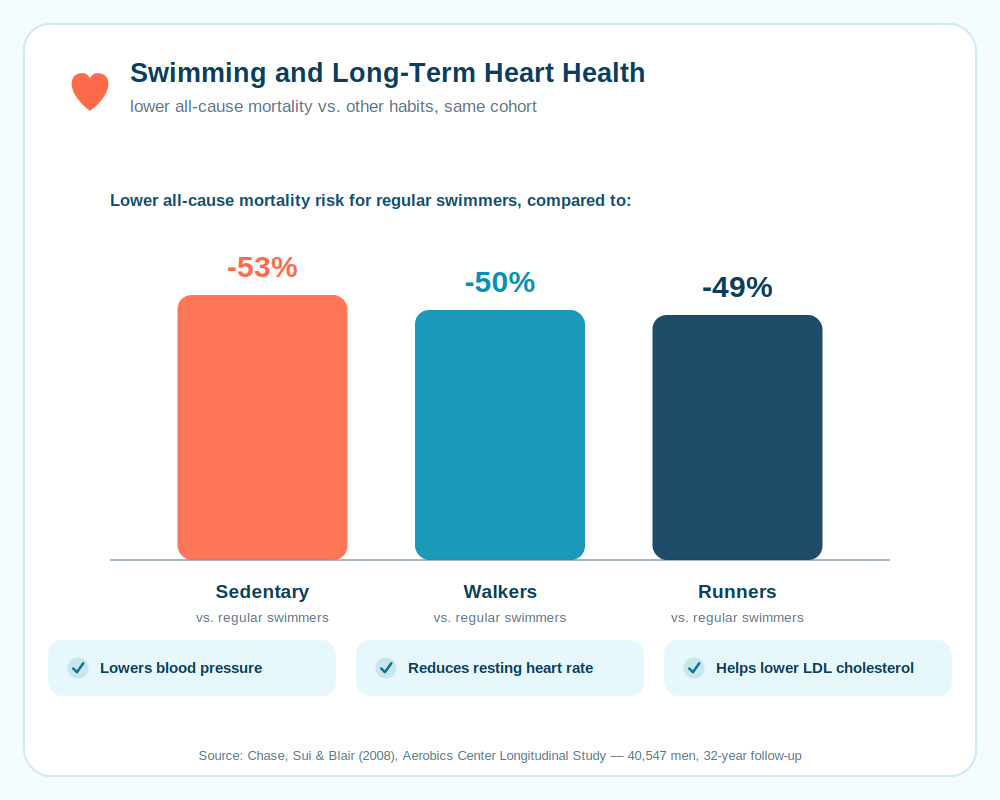
The most-cited evidence comes from the Aerobics Center Longitudinal Study (Chase, Sui, and Blair, 2008), which followed 40,547 men aged 20–90 who were examined between 1971 and 2003, accumulating more than 543,000 person-years of observation. After adjusting for age, BMI, smoking, alcohol, and family history of cardiovascular disease, regular swimmers had 53%, 50%, and 49% lower all-cause mortality the risk of death from any cause than men who were sedentary, walkers, and runners, respectively.
Two honest caveats belong with that number. The study included men only, and it is observational: it shows an association between swimming and longer life, not proof that swimming alone caused it. People who swim regularly tend to differ from those who do not in ways the study could not fully account for. The finding is strong evidence that swimming belongs among the healthiest forms of exercise not a guarantee of a specific outcome for any individual.
A stronger heart pairs naturally with the next question people ask: whether swimming helps with weight.
Is swimming good for weight loss?
Swimming supports weight loss when you swim in a calorie deficit burning more calories than you consume. Swimming burns a meaningful number of calories as a full-body, low-impact cardio exercise, but the deficit is driven by overall diet and activity, not by the pool alone.
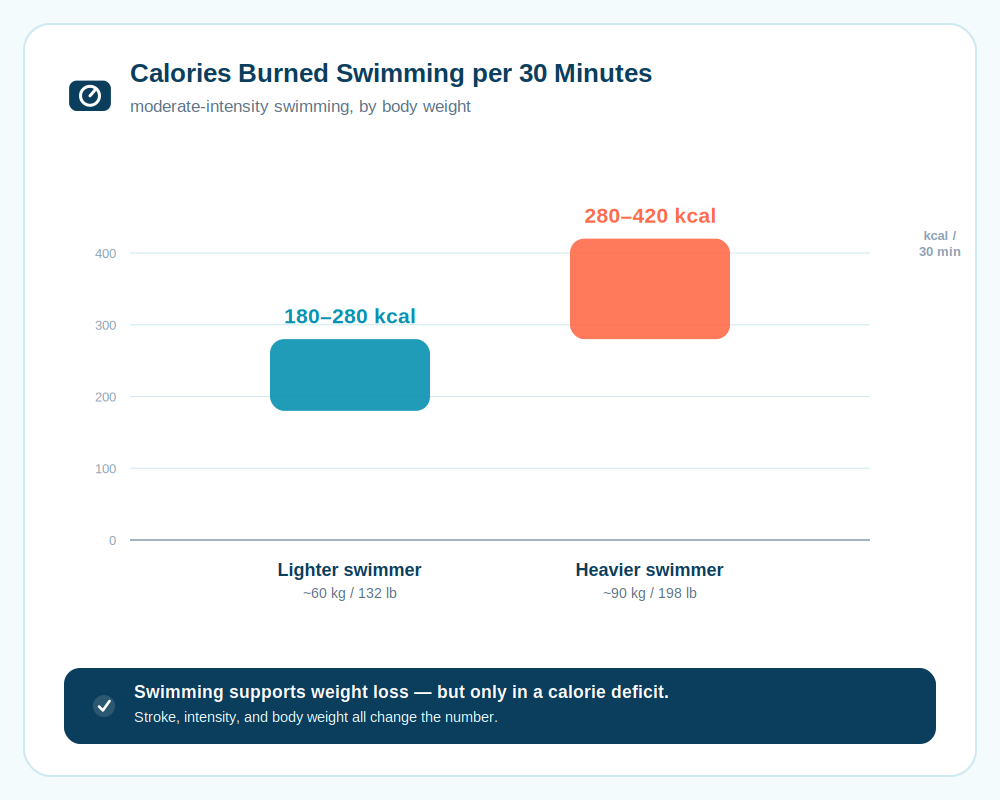
A typical session burns roughly 180 to 420 calories per 30 minutes, varying with stroke, intensity, and body weight: a lighter swimmer of about 60 kg (132 lb) at a moderate pace sits toward the lower end, while a heavier swimmer of about 90 kg (198 lb) swimming vigorously burns toward the upper end. The Canadian 24-Hour Movement Guidelines recommend 150 minutes of moderate-to-vigorous aerobic activity per week for adults aged 18 to 64 a target swimming meets comfortably.
Still, swimming supports weight loss but does not replace a calorie deficit, and exercise can raise appetite afterward, so what you eat after a swim matters as much as the swim. That calorie burn comes with far less strain than running, because of how the water carries you.
Is swimming low-impact and good for your joints?
Yes. Swimming is low-impact and good for the joints, because of buoyancy the upward force water exerts on a body. When you are immersed to the neck, water offsets roughly 90% of your body weight, so the joints carry a fraction of the load they bear on land. (The support depends on depth: chest-deep and waist-deep water carry progressively less.)
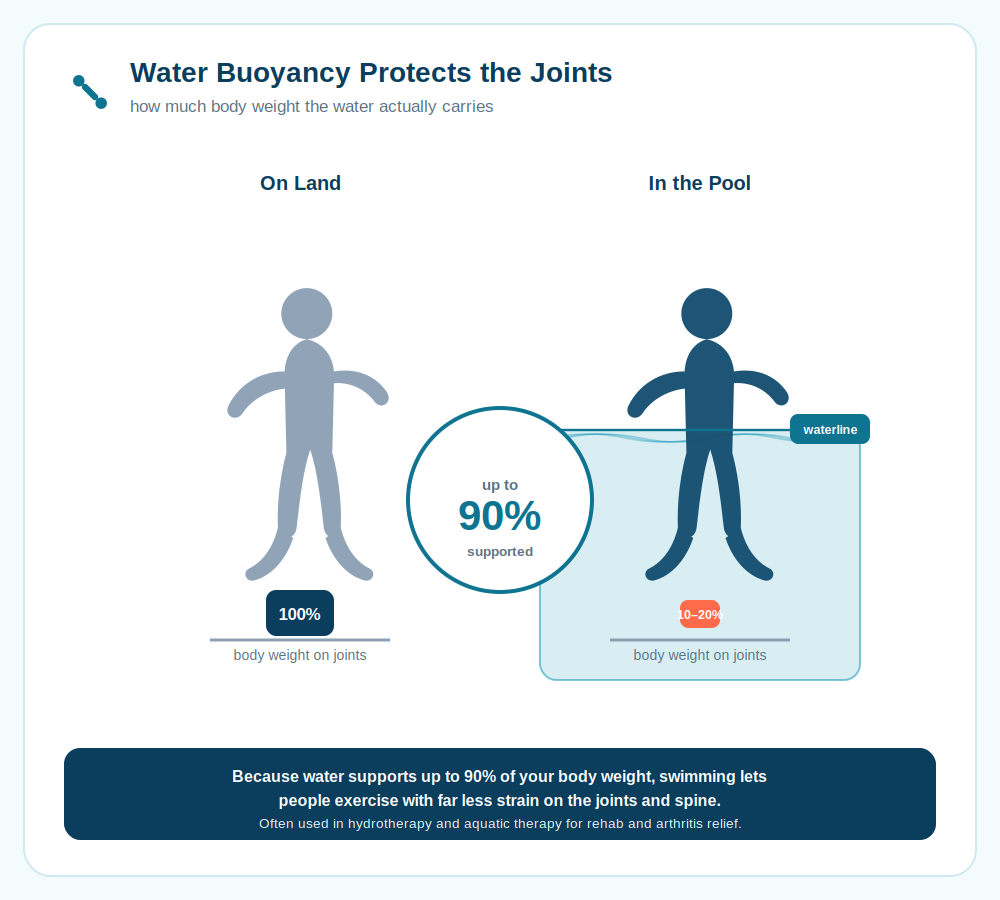
Low-impact means the activity avoids the hard, repeated jarring that running and jumping send through the knees, hips, and spine, which is why swimming suits painful, arthritic, or recovering joints so well. This is the same principle behind hydrotherapy and aquatic therapy, where warm-water exercise is used for rehabilitation and pain relief.
The same rhythmic movement that spares the joints also trains the muscles you breathe with.
Does swimming improve lung capacity and breathing?
Swimming improves breathing efficiency and breath control, because its controlled, rhythmic breathing trains the respiratory muscles and demands that every stroke pair with a deliberate inhale and exhale. A 2021 systematic review and meta-analysis in the International Journal of Nursing Studies found that swimming training improved lung function in children with asthma.
One clarification worth making: swimming trains how efficiently you use your lungs rather than dramatically enlarging total lung volume, which is largely set by body size and genetics. The gains are in respiratory muscle strength, breath control, and measured lung function real, but not magic.
The honest caveat: pool disinfection by-products can aggravate the airways of some swimmers, particularly those with asthma, so the benefit is not universal.
Those breathing benefits extend to people managing long-term conditions, including arthritis.
Can swimming help with arthritis and chronic conditions?
Yes. Swimming and aquatic exercise physical activity performed in water for therapeutic benefit can reduce joint pain and improve how well people move. The CDC identifies water-based exercise as an effective option for people with arthritis and other chronic conditions, noting that people are able to exercise longer in water without increased joint or muscle pain, and that water-based exercise can improve the use of affected joints and decrease pain from osteoarthritis. The CDC also points to benefits for people living with fibromyalgia, heart disease, and diabetes, and to improved quality of life and reduced disability among older adults.
For anyone managing a chronic or serious health condition, swimming offers a way to stay active when land-based exercise is too painful though the right approach depends on the individual condition and should be discussed with a physician.
This section is not medical advice consult your physician.
For one common condition, the answer needs a caveat.
Is swimming safe if you have asthma?
Generally yes, and the warm, humid air above a pool can make breathing easier for some people. The caveat is that chlorine by-products in the air and water can aggravate symptoms in others, and researchers continue to study the respiratory effects of heavy, long-term exposure to indoor chlorinated pools. Anyone with asthma should check with a doctor before starting, and choose a well-ventilated, well-maintained facility.
This section is not medical advice consult your physician.
Physical gains are only half the story; swimming changes the mind as much as the body.
What Are the Mental Health Benefits of Swimming?
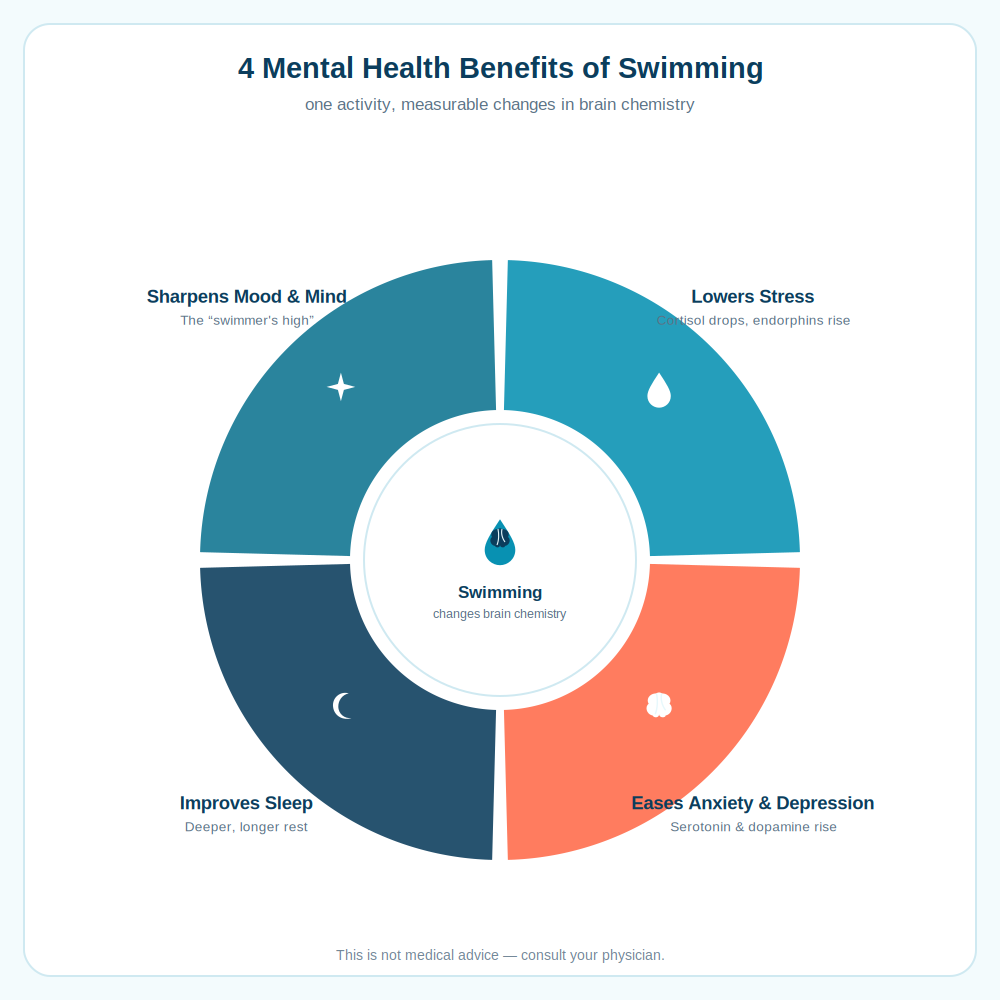
Swimming benefits mental health in four ways: it helps lower stress, eases anxiety and low mood, improves sleep, and sharpens mood and focus. Most of these effects are what regular aerobic exercise does for the brain, delivered in a form that is rhythmic, repetitive, and easy on the body.
This section discusses mental health and is not medical advice consult your physician.
How does swimming reduce stress?
Swimming helps reduce stress the way sustained aerobic exercise generally does by lowering circulating cortisol, the body’s main stress hormone, over time, and by triggering the release of endorphins, the brain chemicals associated with a sense of wellbeing. The combination of rhythmic strokes and controlled breathing creates a meditative effect, pulling attention away from stressors and into a steady, repetitive motion.
That same calming effect extends to heavier conditions: anxiety and low mood.
Can swimming help with anxiety and depression?
Exercise is well established as a support for anxiety and low mood, and swimming is a good way to get it. Physical activity drives the release of serotonin, dopamine, noradrenaline, and endorphins the chemicals that regulate mood and regular aerobic exercise has consistent evidence behind it for easing symptoms of anxiety and depression.
Being near and in water may add something of its own. This connects to the idea of Blue Mind, a concept popularised by marine biologist Wallace J. Nichols describing the calm, restorative mental state that water brings. It is worth being precise about the evidence here: the case for exercise easing stress and anxiety is well established, while research specifically on cold-water and open-water swimming for depression is promising but still emerging mostly small feasibility studies rather than large trials. Blue Mind is a compelling idea, not a settled scientific finding.
Managing stress and anxiety is one of the clearest reasons people return to the pool week after week. Swimming is a healthy complement to treatment, not a replacement for it if you are struggling, speak to a doctor or mental health professional.
Beyond mood, that regulation shows up somewhere measurable overnight: in sleep.
Does swimming improve sleep?
Regular exercise, including swimming, is consistently linked to better sleep quality and duration, and swimming delivers it in a form that is easy on the joints. The physical tiredness from working every major muscle group helps the body settle into deeper rest, and the stress reduction that comes with regular activity carries into the night.
Better rest feeds the final mental benefit: sharper mood and thinking.
How does swimming affect mood and brain function?
Swimming lifts mood the “swimmer’s high,” the aquatic cousin of the runner’s high, arriving without the joint impact. Beyond the immediate lift, regular aerobic exercise is associated with better memory, concentration, and cognitive function, supported by increased blood flow to the brain.
Research in animal models suggests aerobic exercise may also encourage hippocampal neurogenesis the growth of new cells in a brain region tied to memory though whether and how much this happens in adult humans remains actively debated among neuroscientists. Treat it as an intriguing possibility rather than an established benefit.
Because these benefits last a lifetime, the real question becomes who should learn and the answer is everyone.
Who Is Swimming For, and Why Is It a Lifelong Life Skill?
Swimming is for everyone, at every age and ability, because it is both a lifelong, low-impact exercise and an essential survival skill. A life skill is an ability a person carries and uses for life, and swimming is one of the few that is also a survival skill: it protects you in the water as much as it benefits you out of it.
That dual nature is what turns the health case for swimming into a safety case, and it is exactly why the best time to learn to swim in Toronto is now, whatever your age. The benefits are real, but they only reach people who can actually get in the water safely.
Is it ever too late to learn to swim as an adult?
No — it is never too late to learn to swim as an adult, and structured learn-to-swim programs are effective at any age. Adults learn differently from children: they can follow instruction and manage fear deliberately, and most reach basic competence within a season of regular lessons.
The need is real. A Lifesaving Society study conducted by Ipsos Reid found that new Canadians were more than four times more likely to be unable to swim (19%) than those born in Canada (4%), while 92% of respondents from immigrant communities considered swimming competence an essential survival skill.
If you have always meant to learn, an adult learn-to-swim program in Toronto is the direct route to both the health benefits above and the safety skills below. And if it’s never too late for adults, it’s never too early for children which in Canada matters most.
Why should every child in Canada learn to swim?
Because drowning is one of the leading causes of preventable injury-death for Canadian children, and swimming ability is a core defence against it. According to the Lifesaving Society’s Canadian Drowning Report, Canada averaged 442 water-related deaths per year between 2015 and 2019. Parachute, Canada’s national injury-prevention organisation, ranks drowning as the third-leading cause of injury-related death for Canadian children under 14 and reports that in 93% of drownings among children under five, the child was unsupervised or the supervisor was distracted.
The Lifesaving Society notes that the majority of people who drown had no intention of going into the water at all — which is precisely why swimming ability matters even for people who never plan to swim.
On lessons, the Canadian Paediatric Society’s guidance is worth stating carefully: children generally do not have the skills to swim on their own until they are at least four years old, and do not become competent swimmers until around six or seven. For children under four, the CPS advises programs that build water confidence and teach parents about water safety. Crucially, the CPS emphasises that swimming lessons alone cannot prevent drowning active supervision, barriers around home pools, and lifejackets remain essential.
Enrolling in children’s swim lessons early gives a child both the health foundation and the water competence that protect them for life — as one layer of protection among several.
Beyond lessons themselves, learning to swim is what actually keeps a person safe in the water.
How does learning to swim keep you safe in the water?
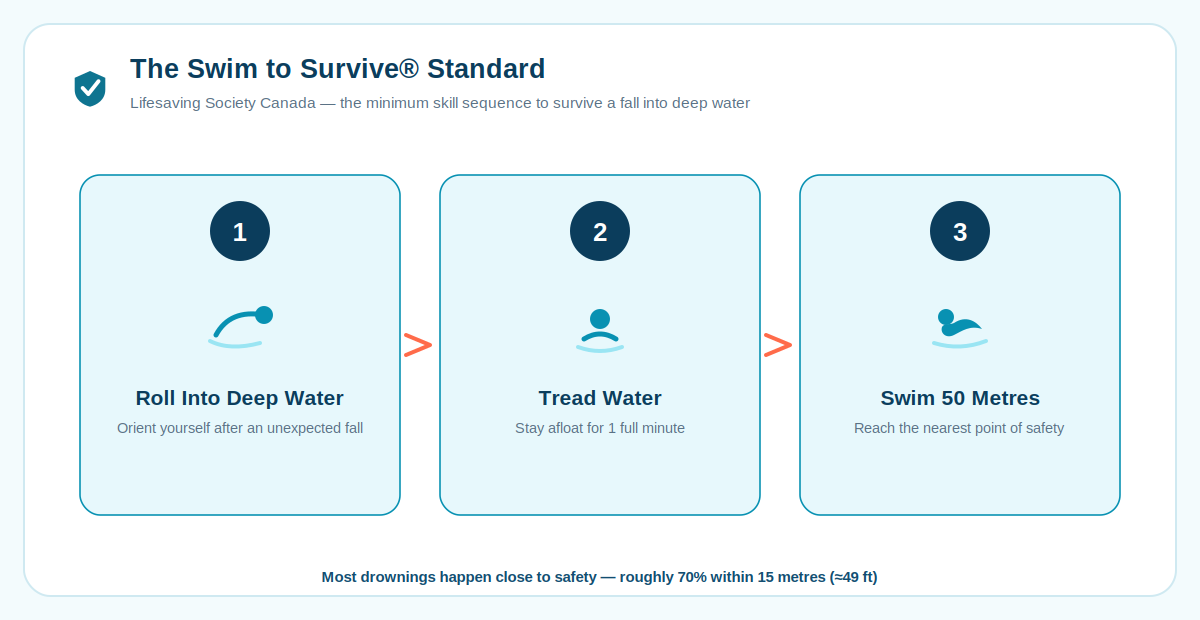
Learning to swim keeps you safe by combining swimming competence with water-safety knowledge. The Lifesaving Society’s Swim to Survive® standard defines the minimum skill sequence for surviving an unexpected fall into deep water:
- ROLL into deep water — simulating a fall, and orienting yourself at the surface
- TREAD water for one minute — supporting yourself while you locate safety
- SWIM 50 metres (about 164 feet) — reaching the nearest point of safety
Its Water Smart® education adds the judgment side: knowing the hazards, respecting cold water, wearing a lifejacket, and never swimming alone.
Ontario carries the heaviest drowning burden in Canada in absolute terms, averaging 168 water-related deaths a year over 2015–2019 — roughly 38% of the national total which is why water safety and the Swim to Survive skills matter so much here. Building real water safety in the GTA means pairing the ability to swim with the knowledge to stay out of trouble in the first place.
Which raises the honest question: do the benefits actually outweigh the risks?
Do the benefits of swimming outweigh the risks?
For most people, yes; when you swim in a safe, supervised environment. The real risks (drowning, and the minor irritation some swimmers get from chlorine by-products) are manageable, and both shrink substantially in a supervised pool with proper instruction, while the physical, mental, and life-saving benefits last a lifetime.
That trade-off is easier to see once a few common myths are cleared up.
Common Misconceptions About Swimming for Health
Swimming’s health benefits are real, but they are often exaggerated or misunderstood.
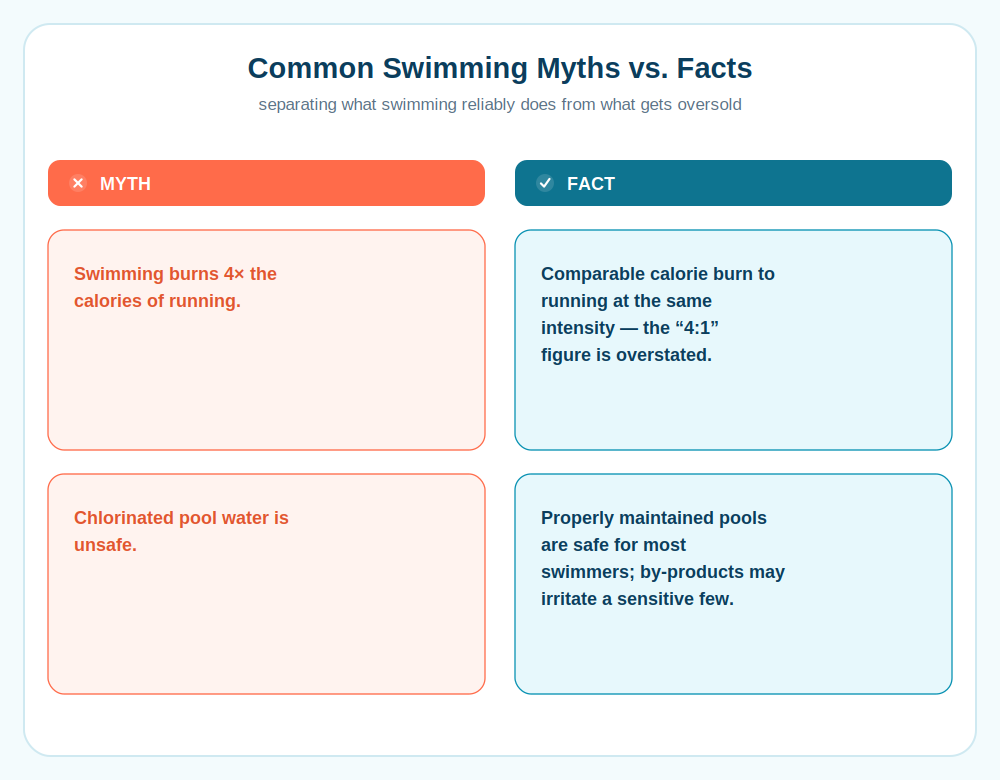
Two of the most common myths concern calorie burn and pool water.
Does swimming really burn as many calories as running?
Swimming burns calories comparable to running at a similar intensity, but the popular claim that it burns roughly four times as much is not supported. Intensity, stroke, and body weight drive the number, and the honest range about 180 to 420 calories per 30 minutes lines up with what a moderate run burns, not several times more.
The takeaway matches the weight-loss section above: swimming is an excellent calorie burner, but the deficit still comes from the balance of intake and output, not from the water itself.
Calories aside, the other myth is about the water itself.
Is chlorinated pool water bad for you?
Properly maintained chlorinated pool water is safe for most people, though its by-products can irritate the eyes, skin, or airways of some swimmers. Disinfection by-products the compounds formed when chlorine reacts with sweat, skin, and other organics are what cause the sting and the smell, and they are the same by-products that can aggravate asthma for a minority of swimmers, as noted earlier.
For the large majority, a well-run, well-ventilated pool poses no meaningful health risk, and the benefits of getting in the water outweigh the mild, manageable downsides. For those managing arthritis or other conditions, the pool remains one of the gentlest places to stay active swimming for arthritis and chronic conditions explains how to approach it safely.
For anything not covered above, the quick answers follow.
Frequently Asked Questions About the Benefits of Swimming
Is swimming good for you? Yes; swimming is a low-impact, full-body workout with well-documented physical and mental health benefits at every age.
Is swimming a full-body workout? Yes; Every stroke works the arms, core, and legs at the same time.
Is swimming good for weight loss? It helps, in a calorie deficit. Swimming burns roughly 180–420 calories per 30 minutes, but diet drives the deficit.
Is swimming low-impact? Yes; Immersed to the neck, water offsets roughly 90% of your body weight, sparing the joints.
Can you learn to swim as an adult? Yes; Adult learn-to-swim programs are effective at any age.
Is it safe to swim with asthma or arthritis? Generally yes for most people, and water-based exercise is specifically recommended for arthritis — but check with your doctor first.
Do the benefits of swimming outweigh the risks? For most people, yes; when you swim in a safe, supervised environment.